


This follows Tech Conferences Are Worth It. The Sessions Are Not. You can read this one on its own.
I said tech conferences are worth every hour and the sessions are not. Nobody argued about the sessions. They wrote about money instead, and five questions arrived.
Five people asked about booths, volunteers, profit, renewal, and churn. Every question was really asking the same thing: did anybody notice I came?
No event, organizer, or vendor is named here. Everything is a composite. The questions were rewritten, and private messages stay private.
The replies came from the other side of the table. Organizers wrote. Vendors wrote. One user-group leader wrote at one in the morning, which tells you enough about the job.
They were not angry. They were tired. Still, they explained their side to somebody who had just spent four thousand words saying their event was built wrong.
Three events I used to speak at no longer exist. There was simply no next year. One of their sites still says, “See you next year,” like a light left on in an empty house.
So these five questions were not haggling. They were asking whether something carried for a decade had one more year left.
I had redesigned the agenda. The first reply asked whether I had ever sold anything.
1. The Booth Is Payroll
“You want me to walk the floor. Have you ever had to sell anything?”
No. I have never had to hit a number by Friday. Nobody has asked me on Monday morning what the booth produced.
I had treated the expo hall as a design problem. To the person paying for the stand, it is payroll.
You buy an expensive rectangle of carpet. You ship a banner across a continent. You stand for nine hours in shoes you would not otherwise wear. Then you try to start a serious conversation about a database problem with somebody moving at speed, pretending to read a phone that has nothing on it.

The booth staff is not failing. Many took the job because they like fixing things for people. Then we put them in a room that allows exactly one move: interrupt.
I have watched the same person hold a small stand for three days, still smiling at five on the last afternoon, with a number to hit and a family at home. That smile is not a tactic. It is the last thing they have left to offer a room that keeps walking.
The vendor stands still and hopes. The attendee walks past and avoids eye contact. We built a room where both of them are uncomfortable and called it networking.
Here is what the carpet is meant to buy, and what usually arrives instead.
| What the stand costs | What it is supposed to buy | What it usually buys |
|---|---|---|
| The space | Presence in front of the whole event | A view of the back of a lanyard |
| The badge scanner | Qualified leads | Four hundred names, six with a budget |
| Three people for three days | Expert conversations | Directions to the toilets, mostly |
| The socks, pens, and bottles | Brand recall | My drawer. I have never bought the software. |
| The sponsored talk | A room full of buyers | A room that emptied when the logo appeared |
In the first post I proposed putting attendees in the booths and making vendors walk. The point was to give the vendor something better than another lanyard passing within scanner range.
Forty conversations about real problems beat four hundred badge scans. A scan proves somebody passed. A problem tells you whether you have anything worth selling.
A screen can already sell an impression more cheaply. If the expo hall cannot produce a conversation, the carpet will disappear in a future budget round. The email will be very polite.
And the carpet will not go alone. Sponsorship keeps tickets affordable. Lose the booth and you may also lose the young attendee who could come only because somebody else quietly covered half the cost.
The booth at least has a line in the budget. The next reply was about the work the budget pretends is free.
2. Ask for the Tuesday
“Nobody walks up to me anymore. Where do I find volunteers?”
This message arrived at one in the morning. I have thought about it more than the other four put together.
It is a money question that never reaches the budget. Volunteer hours may be the event’s largest hidden expense. When they run out, the work returns as an agency quote that makes somebody sit down.
The old model was simple. You ran something good. Somebody enjoyed it and offered to help next year. You did not recruit. You were found.
I do not think generosity disappeared. I think the offer got worse.
Nobody volunteers for a role. People volunteer for a Tuesday.
Look at what “volunteer” now offers: no description, no end date, no handover, and the fear that if you stop, something people love will fall over. Nobody signs up for that twice.

So make the work small enough to say yes to.
Ask for a task, not a title. “Own badge printing on Friday afternoon” gets a yes. “We need volunteers” gets sympathetic nodding.
Give it an end date. People work hard for something that finishes. Ask for infinity and they never begin.
Ask one person in private. Ask a room and everybody assumes you meant somebody more qualified.
Name the exchange. They gain a network and proof they can organize something. Both are valuable.
Thank them where their manager can see it. A public thank you can reach a performance review. That costs one post.
Your volunteers may already be in the building. Somebody fixed a projector, moved forty chairs, or walked a lost attendee to the right room. Nobody told them that counted.
I have watched a good user group end because the one person holding it got a promotion, a baby, or a diagnosis. None of those is a failure. The failure was that eleven years of something people loved sat on one calendar, and nobody else had the keys.
To whoever wrote at one in the morning: you are not short of generous people. You are short of sleep. Give one piece away this week. It may not be done your way, but the thing gets to survive you.
Once that hidden labor is counted, the third question becomes uncomfortable.
3. Test It Small. Publish the Numbers.
“Is your version more profitable, or just nicer?”
Fair question. A bit rude. I like it.
I do not know. Nobody has run my complete version as a real event. Any number I gave you would be invented.
I can tell you where the money goes now. It buys the machinery required to point several hundred people in the same direction: ballroom, staging, audio, screens, lighting, and a catering number guessed months in advance.
The most expensive thing at most conferences is the equipment that makes one person louder.
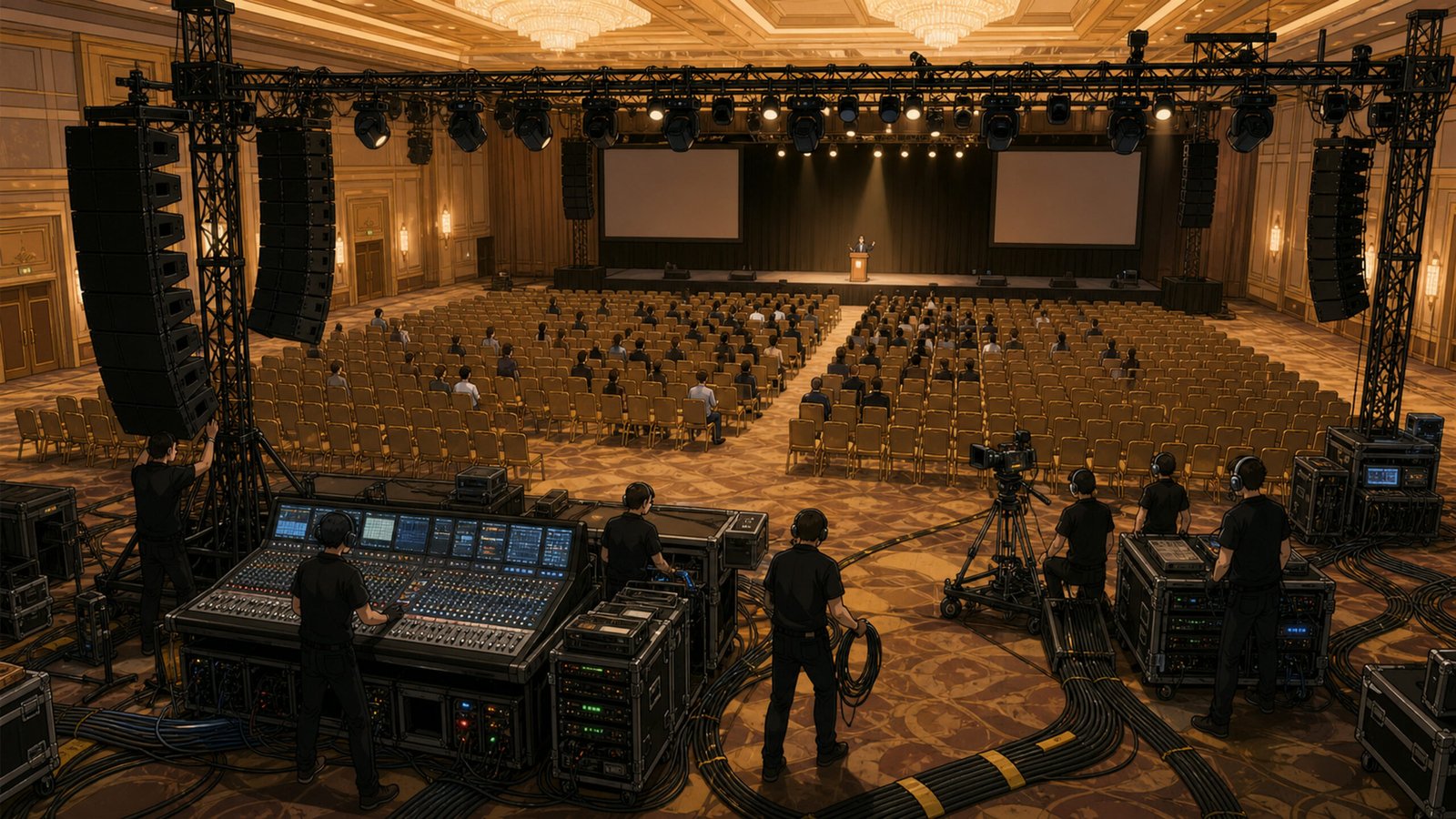
Now price the alternative: small rooms, tables, chairs, coffee, and appointments instead of a broadcast. Fewer people, paying more, for the half nobody can download.
I cannot promise it earns more. I can promise it risks less. A small-room event costs less than a ballroom booked in March, months before you know who is coming. That is a wager with catering attached.
Run it for eighty people. Charge the real price. Publish the numbers. I will buy a ticket, skip the speaker slot, and stack chairs at the end. I would rather be wrong in a small room than right in an essay.
If it loses money, publish that too. The only question worth settling is whether people will pay for what a recording cannot give them.
If that is what they are buying, the next question is what makes them buy it again.
4. People Return for People
“How do I get people to come back?”
This came from somebody whose attendee list is half new every year. They sounded tired in a way I recognized. If people come only for content, success works against you. Once they learn the thing, it is learned. The recording is free anyway.
Nobody renews a ticket. They renew a friendship and the ticket comes with it.
Renewal is decided by who they leave with.
Seat them together again. If the assigned lunch from the first post worked, rebuild the table next year. You have turned a conference into a reunion.
Recognize the returners. A small mark on a year-three badge costs almost nothing. People will ask how to earn one.
Finish last year’s story. Bring a speaker back to explain what happened after the promise on stage. That ending exists only at your event.
Send the envelope. Post their handwritten promise back ninety days later. They will remember who sent it.
Give them a small job. Owning one piece of next year gives somebody a reason to return.
Do not chase renewal with a discount. A lower price does not create a reason to return. It only turns last year’s price into an argument.
The people I still see every year, I met at a registration desk, in a queue, or because a stranger moved a bag off the chair beside them. I cannot name one session from those weeks. I can tell you what we ate.
The renewal email arrives too late. The decision was made at lunch.
The fifth question came from the people who never opened the renewal email.
5. They Left Without Saying Why
“The ones who stopped coming never told me why.”
Nobody sends a breakup letter to a conference. They do not complain, they do not unsubscribe, they do not write a post. They just stop appearing, and everybody assumes they went somewhere better.
The reasons are often ordinary. The budget went. The job changed. A parent got ill. One weak year had nothing else holding the trip together.
But there is another loss the survey rarely sees.
They arrived alone at eight. They read the agenda twice on the stairs so they would look like somebody with a plan. By coffee, everybody else appeared to know somebody.
At the reception they waited at the edge of a group for a gap that never came. Later they ate alone, jacket still on, phone face down out of pride. A waiter lifted away the second place setting without being asked.
Nobody was cruel. Nobody had to be. They quietly decided the conference was not for them.
I have been that person. Wrong shoes, name spelled almost right on the badge, an opening line rehearsed and never used. Somebody finally said hello at the coffee urn and asked what I worked on.
That was the whole intervention. Ninety seconds, no budget line, nobody’s KPI. Years later, I can still trace part of my career to one stranger who did not look at their phone.

Nobody writes that on a feedback form. It reaches the dashboard as nothing at all. The survey asks the people who stayed why they stayed. It cannot explain the people who vanished.
Phone ten people who left. Use no script. Ask one question: what did you do instead? Five honest answers will teach you more than another year of forms. Some may return simply because somebody noticed they were gone.
Then fix the first hour. If somebody walks in alone at eight and is still alone at ten, they have already decided. Two more days cannot repair a first morning that made them invisible.
Notice who goes. It is rarely the veteran with fifteen years of friends in the room. It is the new one, the quiet one, the one who came alone. Our industry says it wants those people, then builds a first hour that sends them home certain they misread the invitation.
An event loses people in the first hour. They stay the other two days out of good manners.
Not Money. People.
Lead cost. Hidden labor. Fixed risk. Renewal. Churn. Five lines in a ledger, each turning out to be a person hoping to be spoken to.
I thought I had written about the agenda. The replies showed me what sat underneath it. The vendor needs somebody to stop. The volunteer needs bounded work. The organizer needs to know what the room actually buys. The returner needs a reason that remembers them. The person who came alone needs an opening in the circle.
That is the strange part of the budget. We spend most of it making one person impossible to miss. We spend almost nothing making sure everybody else remains visible.
If you run one of these, you already know which lunch table went quiet and who stayed behind to coil the cables. Trust that. The dashboard cannot see it.
These rooms are where an industry hands itself to the next set of people. It happens in the queue, at the coffee urn, at the table where a stranger moves a bag so somebody can sit down. If the rooms close, we may not notice for years. Then we will look at a profession that stopped replacing itself and call it a talent shortage.
What is still worth paying for once the information itself is free is the question running underneath all thirty essays in my book AI: Nobody’s in There. But we’re still in here. Every essay is free to read in the complete online collection, and there is a paperback on Amazon if you would rather hold something real.
To the five people who wrote, including the one at one in the morning: thank you. I tried to answer your money questions. You showed me they were people questions.
Keep them coming. The argument is better from the other side of the table.
This is not a story about how to run a cheaper conference, it is a story about what it costs when nobody notices you came.
Reference: Pinal Dave (https://blog.sqlauthority.com/), Tech Conferences, X
