

Fiction. The understudy is the person paid to stay ready, and this is what that job looks like from the inside.
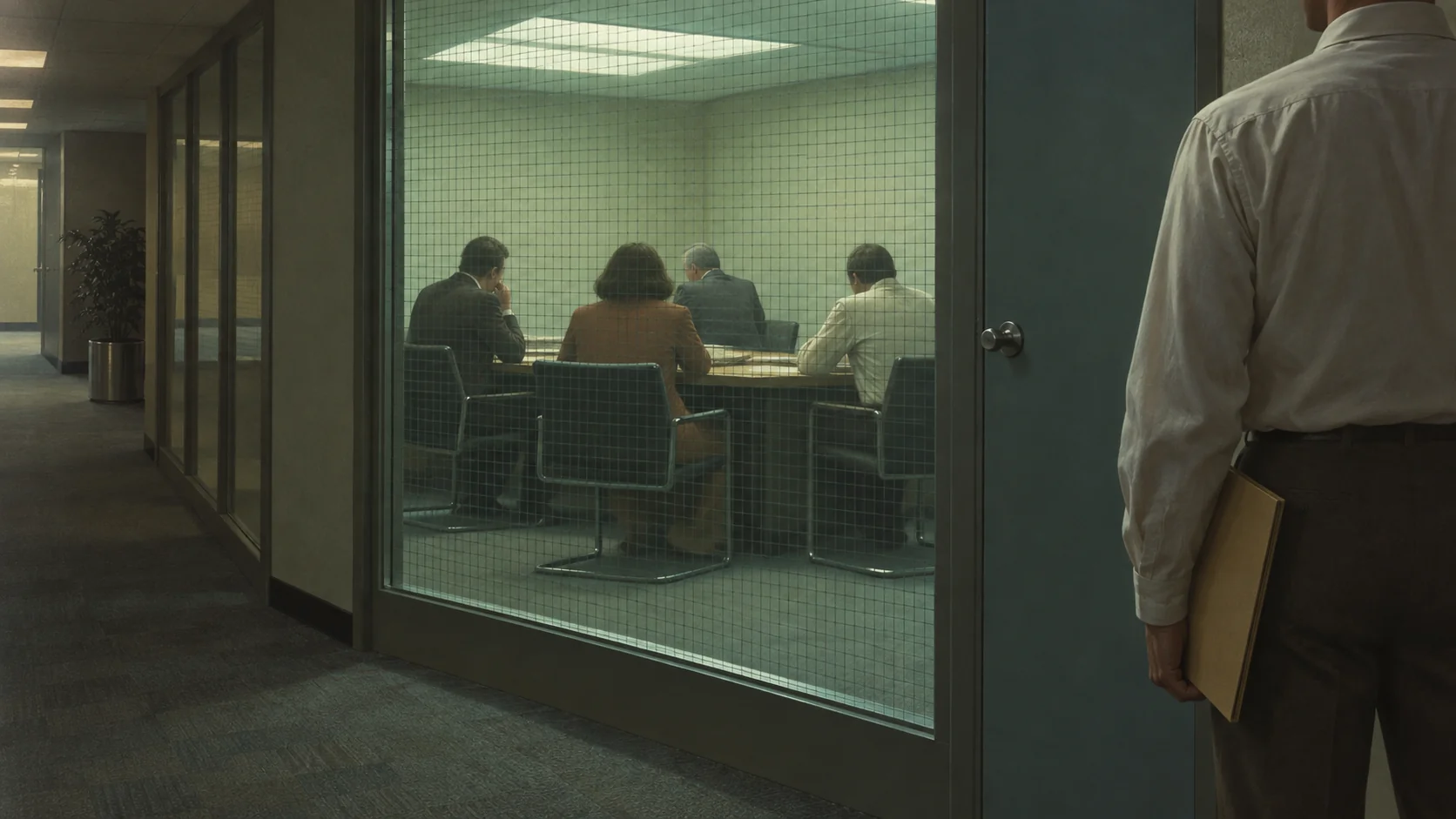
My room was booked. I stood outside with my folder and watched four strangers use my Thursday.
Room 4 has no window and the old chairs. I book it for the first Thursday of every quarter. I have done that for eleven quarters.
Nobody cancelled it. It was overwritten. The system allows that when nobody opens the meeting.
My meeting has no other guests. There is nothing to open.
What I am for
My job title is Continuity Analyst. People who understand the job call me the understudy. They are being kind, not cruel.
Every night a system works out who owes what to whom. Millions of payments, four currencies, done by three in the morning.
It has not had a bad night since the spring I was hired.
If it stops, I do it. Not help. Not check. Do it, by hand, from the raw files, until somebody fixes the system.
So I have to stay able to. You lose a skill you never use.
Four times a year I take last night’s files and do the whole thing myself. On paper. Against the clock.
Then I check my answer against the system’s answer. It did the same work hours earlier, in under a second.
The gap between those two numbers is my performance review.
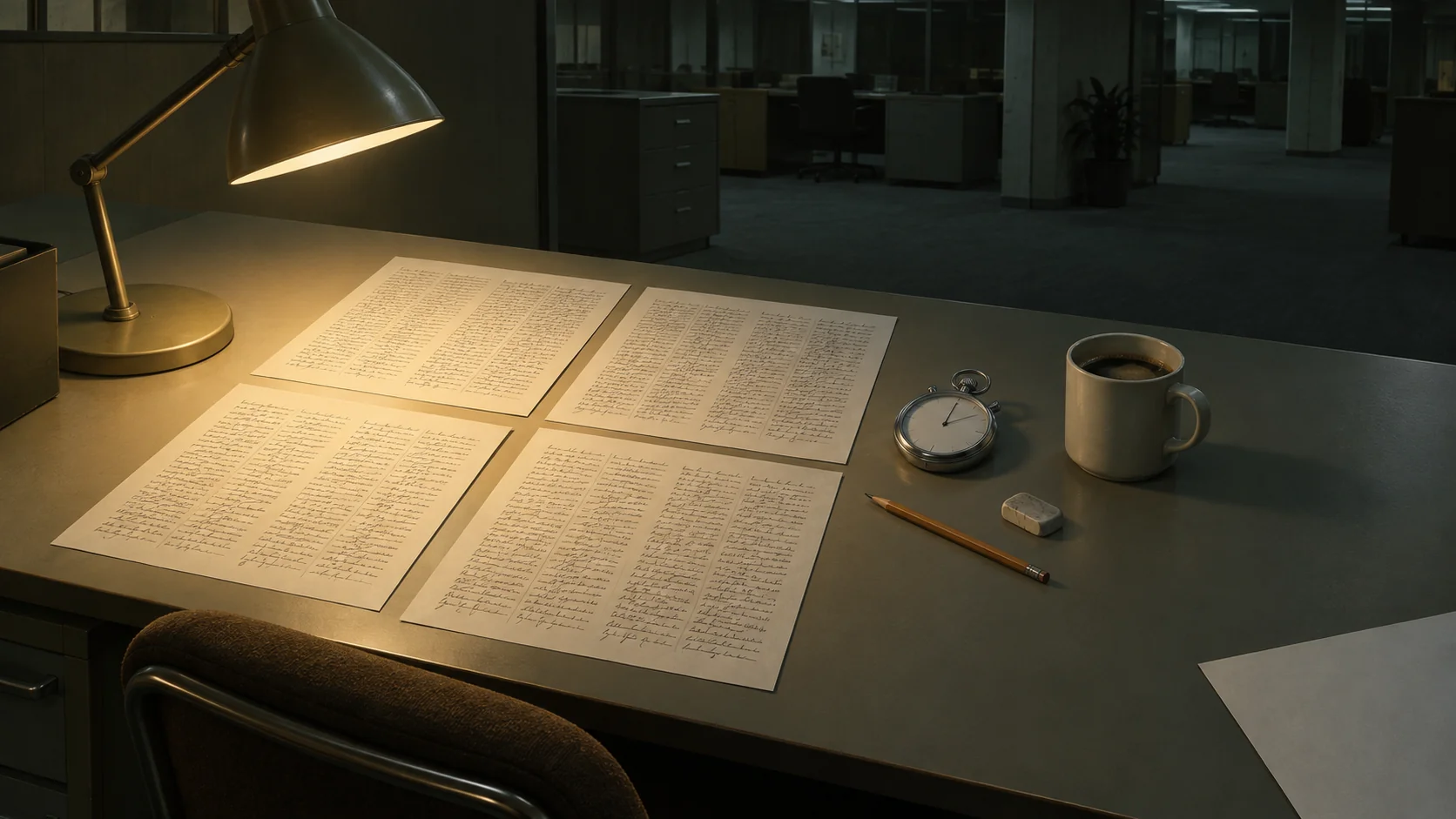
It takes me four to six hours. My best is four hours and eleven minutes.
The system is faster than me and better than me. People expect me to hate it for that. I do not.
It is better at this than I am. That is why it has the job and I have the folder.
What I have that it does not is worry.
I know which firm sends a broken file when their month ends on a Sunday.
I know the one that puts minus signs where plus signs go. It has done that for years. Nobody there has noticed.
The system knows that too, in its way. It does not know it the way you know a neighbour.
The strange part of the drill is not the sums. It is the quiet.
Nobody is waiting for my number. The number already exists and it is right.
For four hours I am the most useless person in the building, working as hard as I can.
Bhatt asks what I do
Bhatt joined in March. She sat two desks away for six weeks before she asked.
I told her. She listened the way people listen when they are working out whether you are joking.
“So you are the backup,” she said.
“I am the plan,” I said. “A backup is a copy of something. I am what happens when there is nothing left to copy.”
She asked how many times that had happened. Never, I said. Not in eleven quarters.
She said that must be nice. She meant it kindly, and went back to work.
I sat with the word nice for the rest of the afternoon.
The job was not invented for me. It was invented because of a Tuesday in another country.
A system there got the numbers wrong for eleven days. It was confident the whole time. Nobody caught it, because everyone who could have caught it had stopped being able to.
Afterwards our regulator asked every firm one question. If that happened to you, who would do the work?
Our answer was a name. The name was mine. I was the only person who applied who had ever done it the slow way.
It is a good answer. It is printed in the annual report, in the part about being resilient.
Nineteen minutes
On a Tuesday in August, the system stopped for nineteen minutes.
I did not know. I was at lunch, on the bench by the loading bay.
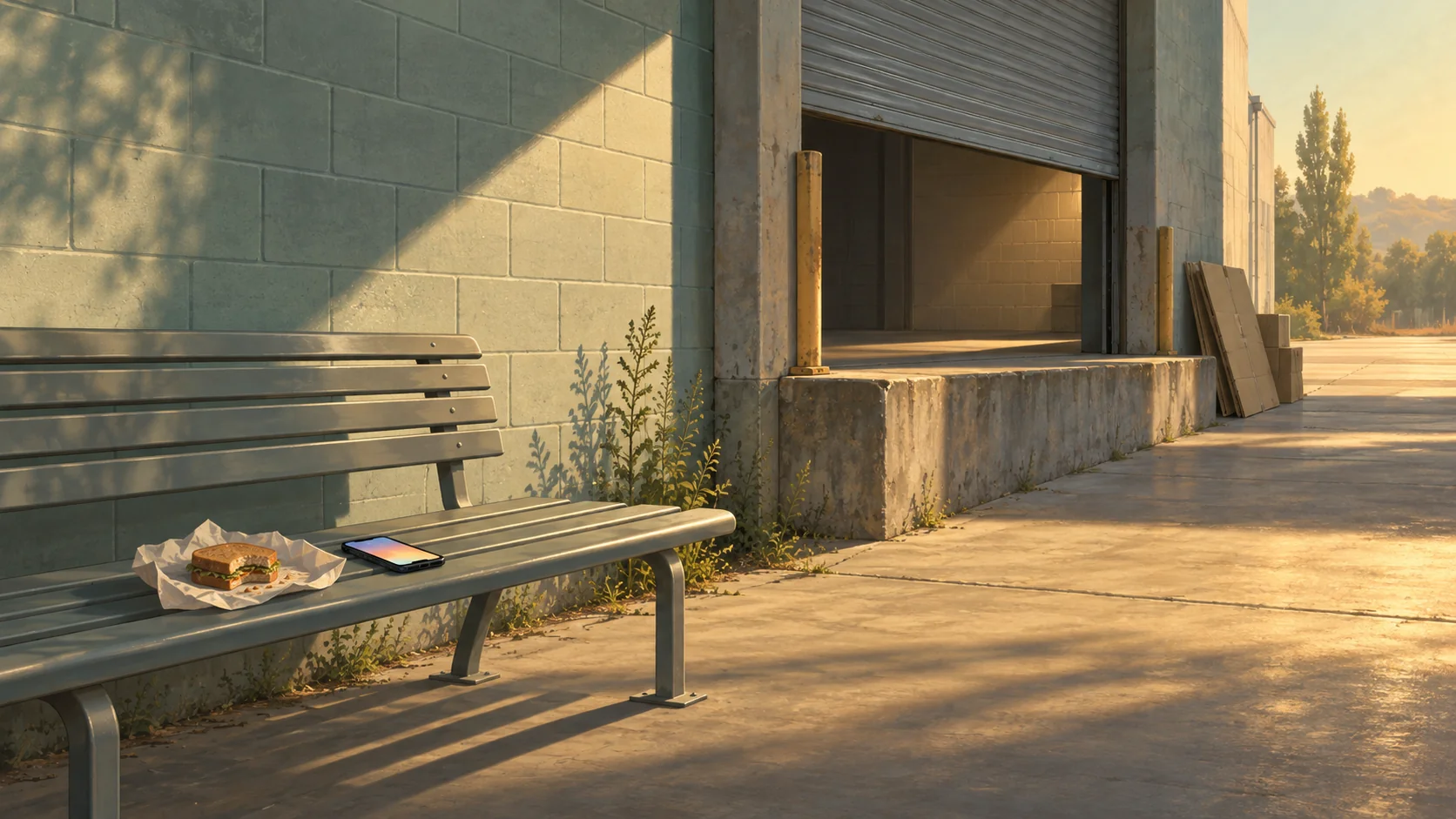
My phone buzzed twice out there. Once was my daughter, sending a photo of somebody else’s dog. Once was the canteen, about a card I do not have.
Nobody from the building called.
The system came back on its own. A disk path failed and the second one worked, which is what the second one is for.
I found out the next morning from the status page, in a note written for everybody.
Then I read the runbook. I had not read it since the year we wrote it. I wrote parts of it.
Step eleven used to say: at fifteen minutes, call the Continuity Analyst.
Step eleven now says: call the vendor.
The change was made two years ago, when somebody merged nine documents into four. The note in the margin says the step was removed because another step already covered it.
No other step covered it. There was no other step. The step was me.
What I did about it
I raised it, and I was careful about how. In my job, complaining about being forgotten sounds like asking for work.
Everyone was quick and reasonable. The step goes back in. There is a ticket and the ticket has a date.
Nobody was careless, either. That reviewer had four hundred pages to merge. There was no way to know that line was the only one of its kind.
That line looks like a repeat. It looks exactly like a repeat.
Here is the part I have not said at work.
For those nineteen minutes, the plan did not exist. The plan on paper was fine. The plan in the building was gone.
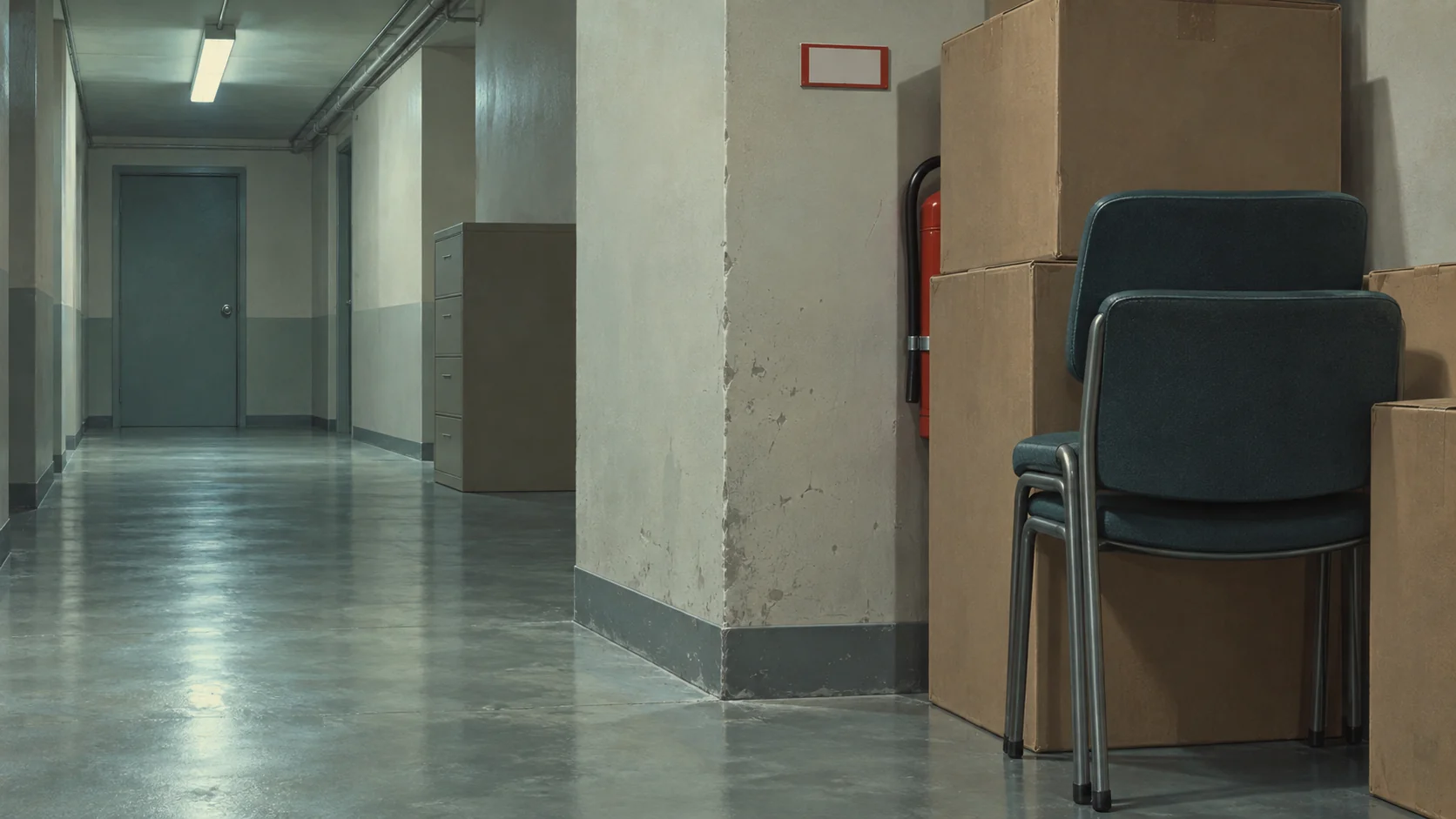
That paragraph in the annual report was still true. True the way a fire extinguisher behind a stack of boxes is still a fire extinguisher.
The first Thursday
I have booked Room 4 again. This time I booked the next four quarters at once.
I will do the files by hand, against the clock. I expect about four and a half hours. My hand goes stiff in the third hour now. That is new.
I am not worried about the machine. It is very good and I hope it has ten more quiet years.
I am worried about being the answer to a question nobody asks any more.
So on Thursday I will sit in a room with no window and do work that is already done. I will be useless as carefully as I know how.
Somebody has to stay able to do it. The whole arrangement rests on somebody staying able to do it.
Ninety days is a long time to keep your hand in on nothing.
I write about machines that answer confidently, and about the people left standing next to them. That is the subject of my book AI: Nobody’s in There. But we’re still in here. All thirty essays are free to read online, and the paperback is on Amazon.
A reserve is not a plan, it is a feeling the plan gives you.
Published by Pinal Dave on SQLAuthority. More of my work at pinaldave.com.
Discover more from SQL Authority with Pinal Dave
Subscribe to get the latest posts sent to your email.
