

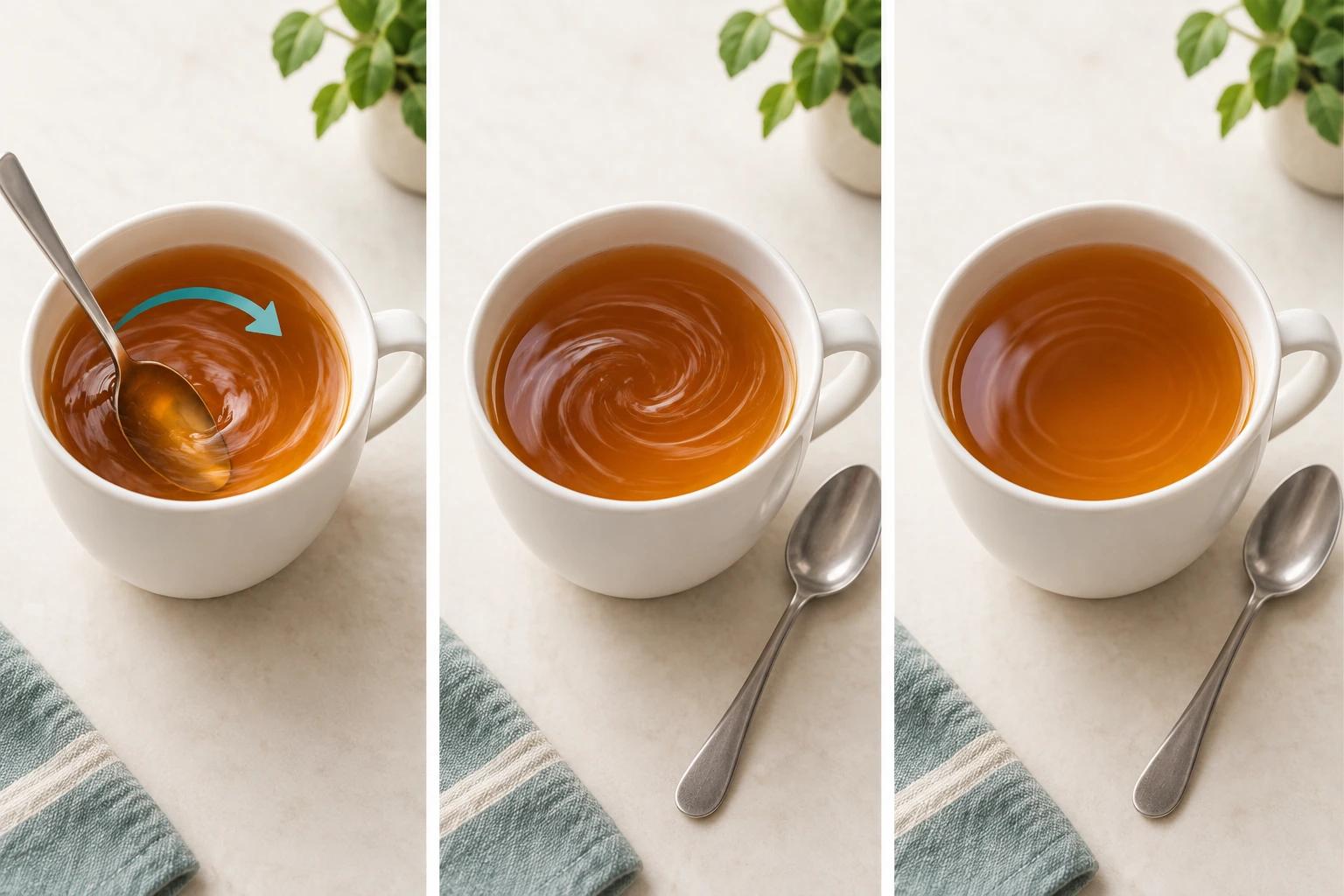
The Navier-Stokes problem starts with a cup of tea. Stir it, pull out the spoon, and watch the swirl slowly settle. The math that describes that swirl is about two hundred years old. For about ninety years, nobody could answer one question about it.
On September 8, 2026, OpenAI announced that its AI had found the answer.
The problem
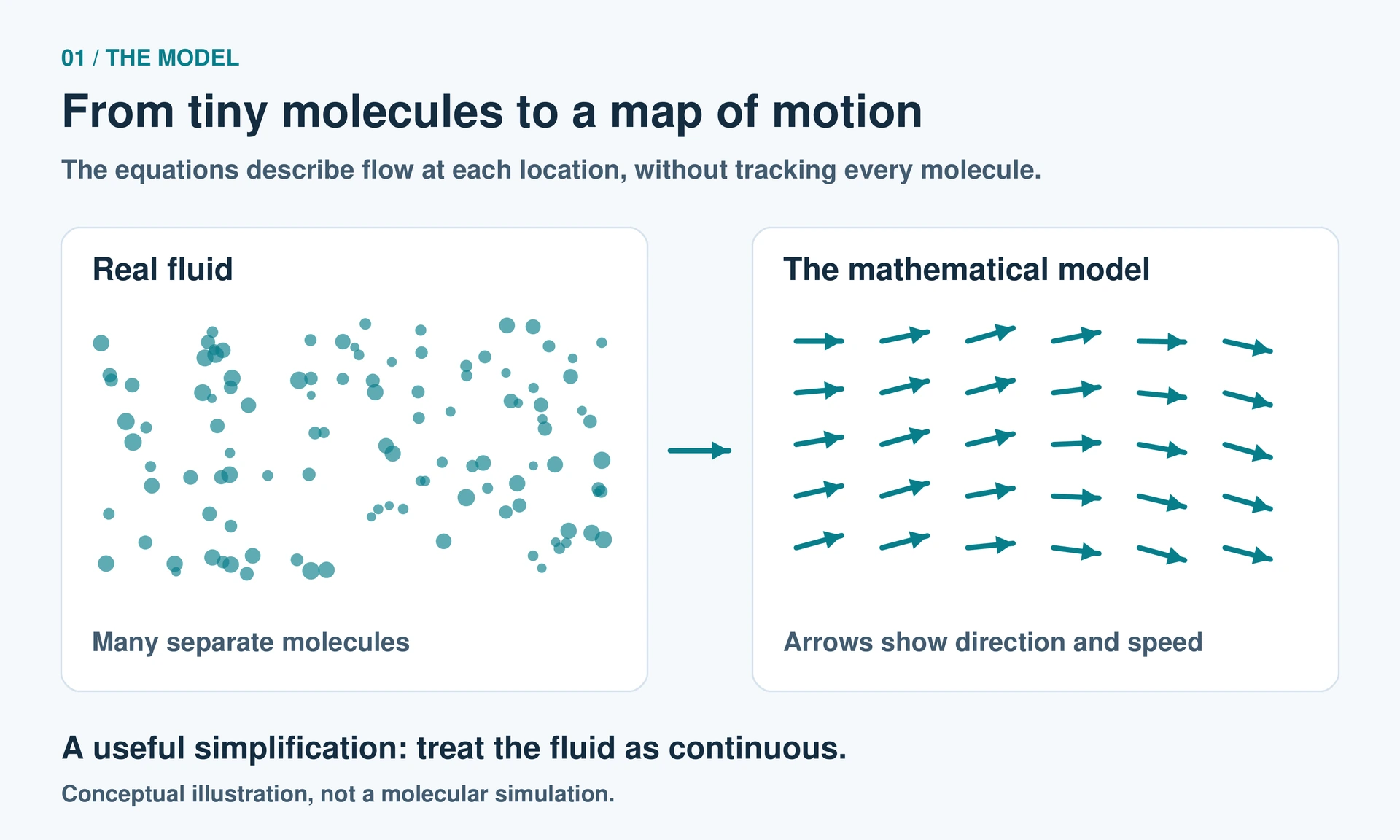
The Navier-Stokes equations describe how fluids move. Water in a pipe, air over a wing, tea in a cup. Engineers use them to design airplanes and cars, and weather forecasts lean on them too. They even account for viscosity, the thickness that makes honey pour slower than water.
Picture a map covered in little arrows. Each arrow shows which way the fluid is moving at that spot, and how fast. The equations tell you how every arrow changes over time.
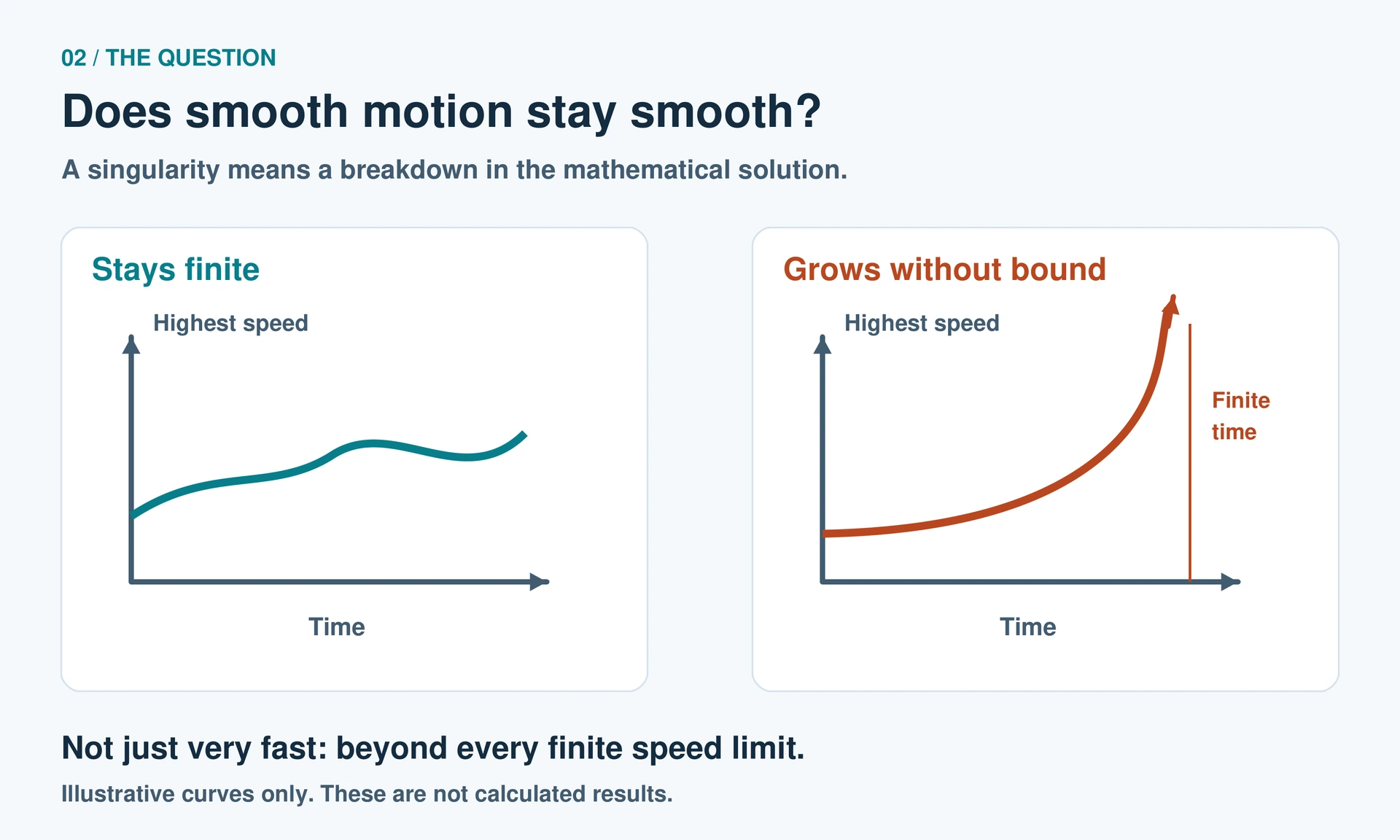
The famous question sounds almost too easy. If a flow starts out smooth, does it stay smooth forever? Or can the math break, with the speed at one spot shooting to infinity in a finite time?
That kind of break is called a singularity. In 2000, the Clay Mathematics Institute made the question one of its seven Millennium Prize Problems. A proof in either direction was worth a million dollars. Nobody collected.
The solution
OpenAI’s answer: the math can break. The company says about 10,000 AI agents worked on it for 88 hours.
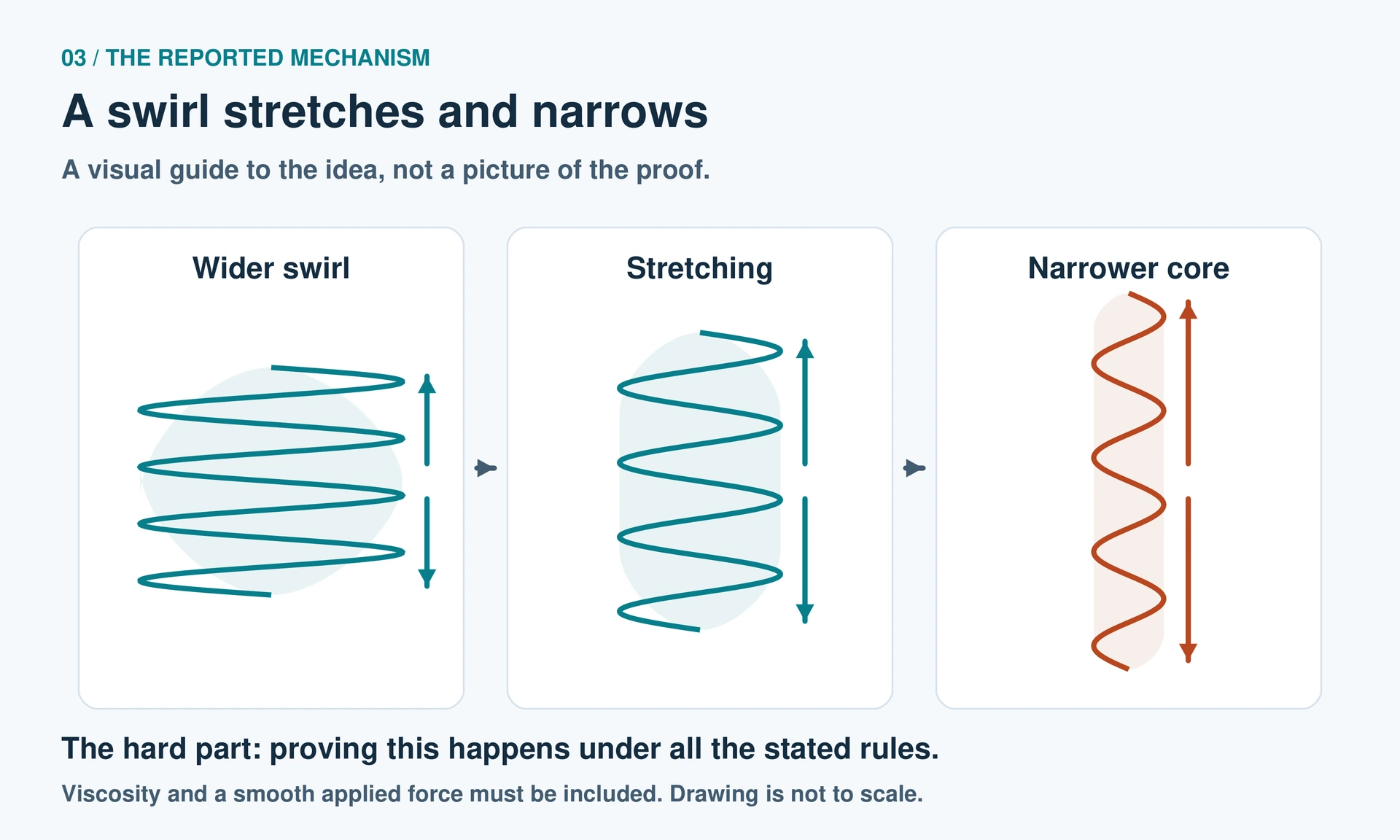
Their example starts with fluid sitting perfectly still. A smooth outside force keeps pushing on it. A spinning core forms, then stretches and gets thinner. As it gets thinner, it spins faster, like a figure skater pulling in their arms.
A real skater runs out of arm. In the math, the core keeps shrinking, and within a finite time its speed has no limit. The total energy stays finite the whole time. All that speed piles into one shrinking spot. Viscosity keeps trying to smooth things out. It loses.
OpenAI also released a version of the proof in Lean, a language that lets a computer check every step. People still have to confirm that the statement it checked matches the real question.
Is it official?
Not yet. As I write this, the Clay Mathematics Institute still lists the problem as unsolved. Its rules say the proof must appear in a peer-reviewed journal. Then it has to hold up for two years before any prize.
OpenAI’s example also needs that outside force. The prize rules allow it, but many mathematicians say the version they care about most has no outside force. Expect that argument to run for a while.
And no, nothing in your kitchen is about to reach infinite speed. That only happens inside the equations.
One more thing before you go back to your tea. In my essay Verification Is the New Bottleneck, I argue that making the work is now the easy half. Deciding whether to trust it is the real job. The Navier-Stokes announcement is the same story, with a million dollars riding on it.
That essay is one of thirty in my book AI: Nobody’s in There. But we’re still in here. Every essay is free to read at pinaldave.com. There is also a paperback on Amazon, if you would rather hold something real.
The announcement is not the finish line, it is where the checking starts.
Published by Pinal Dave on SQLAuthority. More of my work at pinaldave.com.
