

Golden robots. Twenty self-driving tripods. Ships with no pilot. Once you start looking for AI in the Iliad and the Odyssey, you cannot stop.
Around 750 BC, a poet described a strange workshop. Twenty three-legged tables rolled themselves to a meeting, attended it, and came home again.
He gives it one line. No wonder. No crowd gathering to watch. No sense that he expects you to be surprised. He mentions it the way you would mention a dishwasher, then moves on.
I went to the cinema that week hoping for a sea monster. I came out with a reading list and a mild problem.
That is not the only thing hiding in plain sight. There is a fleet of autonomous vehicles. There are humanoid machines specified in enough detail to survive a spec review. There are ships that know where you want to go before you tell them.
And in Book 12 of the Odyssey, the best piece of safety engineering ever written down. We have spent three years reinventing it badly in conference rooms.
None of it is prophecy. Homer had no idea what a transistor was. Anybody selling you the prediction angle is selling you a course.
He was doing something harder. He was writing down what it feels like to stand beside something far more capable than you. Something that does not think the way you think. Something that can carry you home or drown you, without much minding which.
He got the technology by accident. He got the experience on purpose.
Prologue: Two Poems, One Argument
The Strongest Man and the Smartest
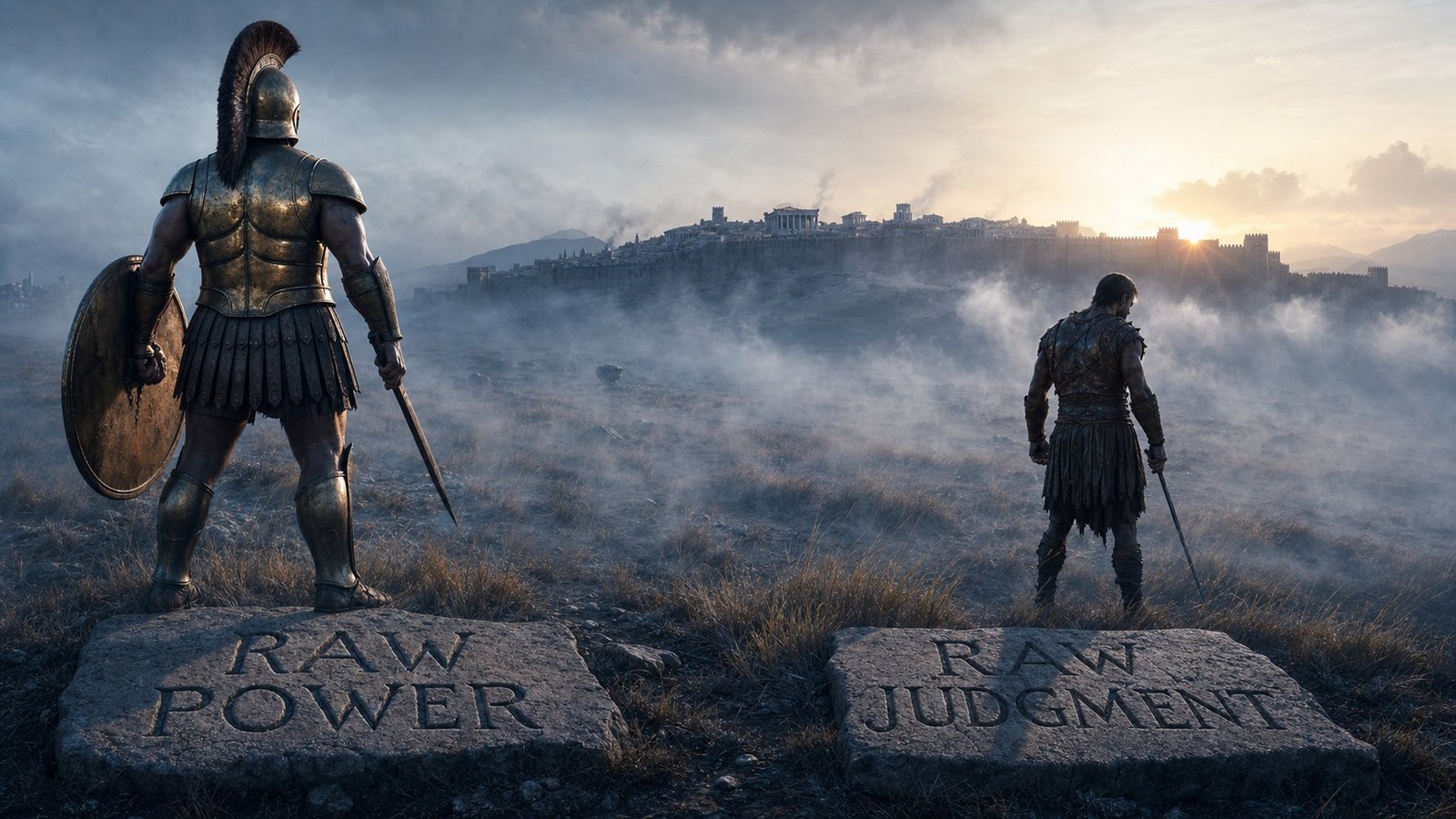
The Iliad is a war story. Ten years outside the walls of Troy, everybody filthy and sick of each other. Its hero is Achilles, the greatest fighter alive.
Nobody beats him in a fair fight, and everyone knows it. He is raw capability with the restraints taken off.
In Book 9 he lays out the two fates his mother gave him. A long quiet life nobody remembers, or a short blazing one people talk about forever. In that scene he says he is sailing home.
He does not sail home. Patroclus dies, and Achilles goes back to the fighting knowing exactly what it will cost.
The Odyssey is what happens after the war. One captain, Odysseus, spends ten more years trying to get home. He loses every ship and every man on the way.
He is not the strongest man in his own poem. Smaller than Ajax. Weaker than Achilles. Worse in a straight fight than half the people he meets.
Homer’s favorite word for him means the man of many turns. The one who thinks his way out of the room rather than through the wall.
Achilles gets the glory. Odysseus gets home.
One poem is about the most powerful thing on the battlefield. The other is about the only man clever enough to survive it. Guess which one now reads like a manual.
Sing to Me, O Muse, and Make It Good
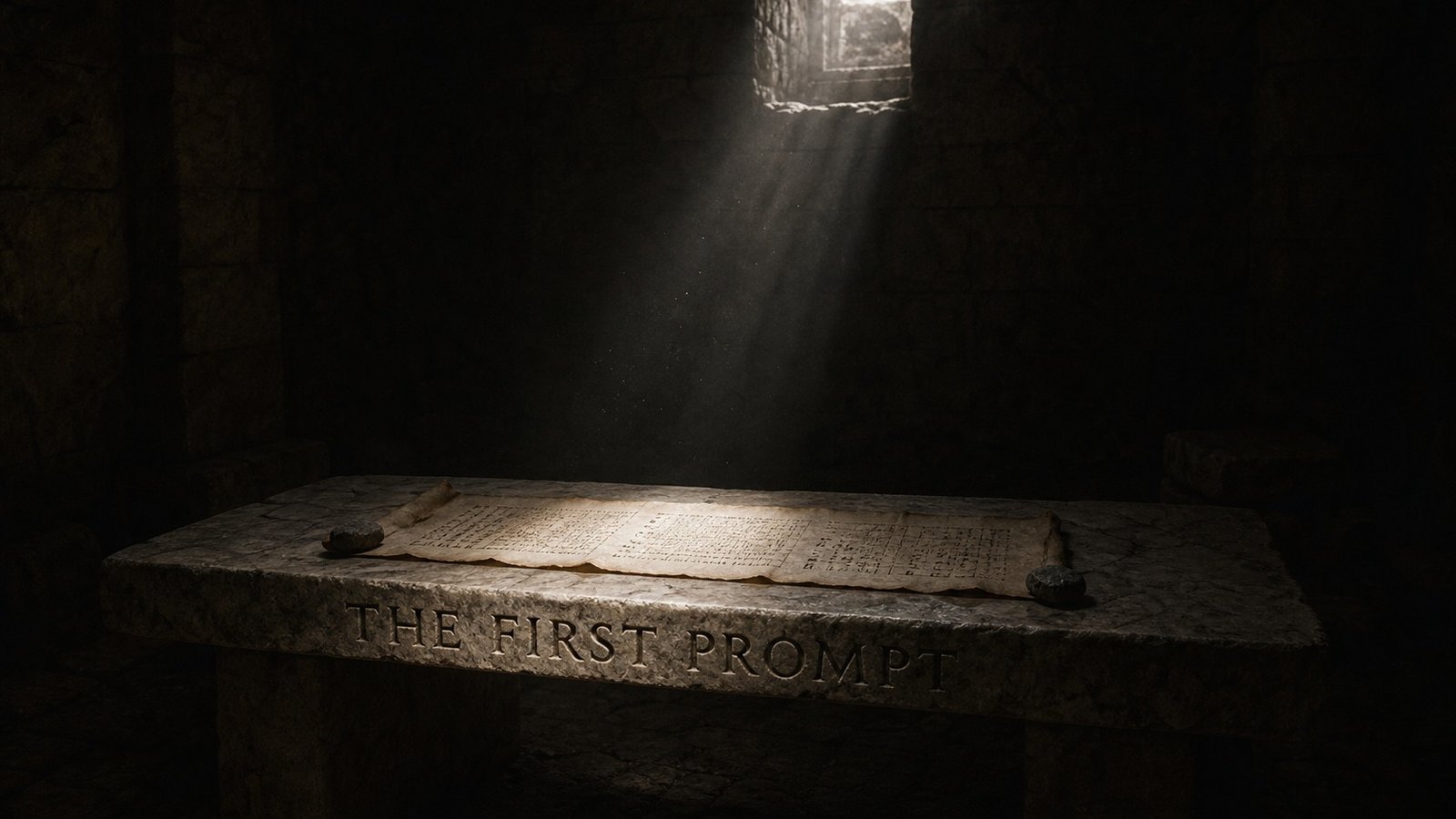
Both poems open the same way, and not with a story. The poet begins by asking something non-human to tell the story to him.
Sing to me, O Muse, of the man of many turns. Sing, goddess, of the rage of Achilles. Only then does the poem start.
Read that with 2026 eyes. A person addresses a non-human intelligence, specifies his subject, and sets the tone he wants. Then he requests output.
The output arrives. He puts his name on it, and we spend three thousand years calling him the greatest poet who ever lived.
Western literature opens with a prompt, a non-human source, and an unresolved authorship question. We have made almost no progress on the third one.
The Greeks believed the poem arrived from outside the poet. Homer never claims to have invented it. He claims to have asked well and listened carefully. That is a fairly modern job description.
Two borrowings, flagged once. Talos, the bronze giant of Crete, is the best robot in Greek myth. He is not in Homer. He belongs to Apollonius. And the famous Trojan Horse scene is Virgil, not Homer, who gives it a passing mention. I use the horse anyway.
Act One: The Forge
The Golden Women Who Had Understanding in Their Hearts
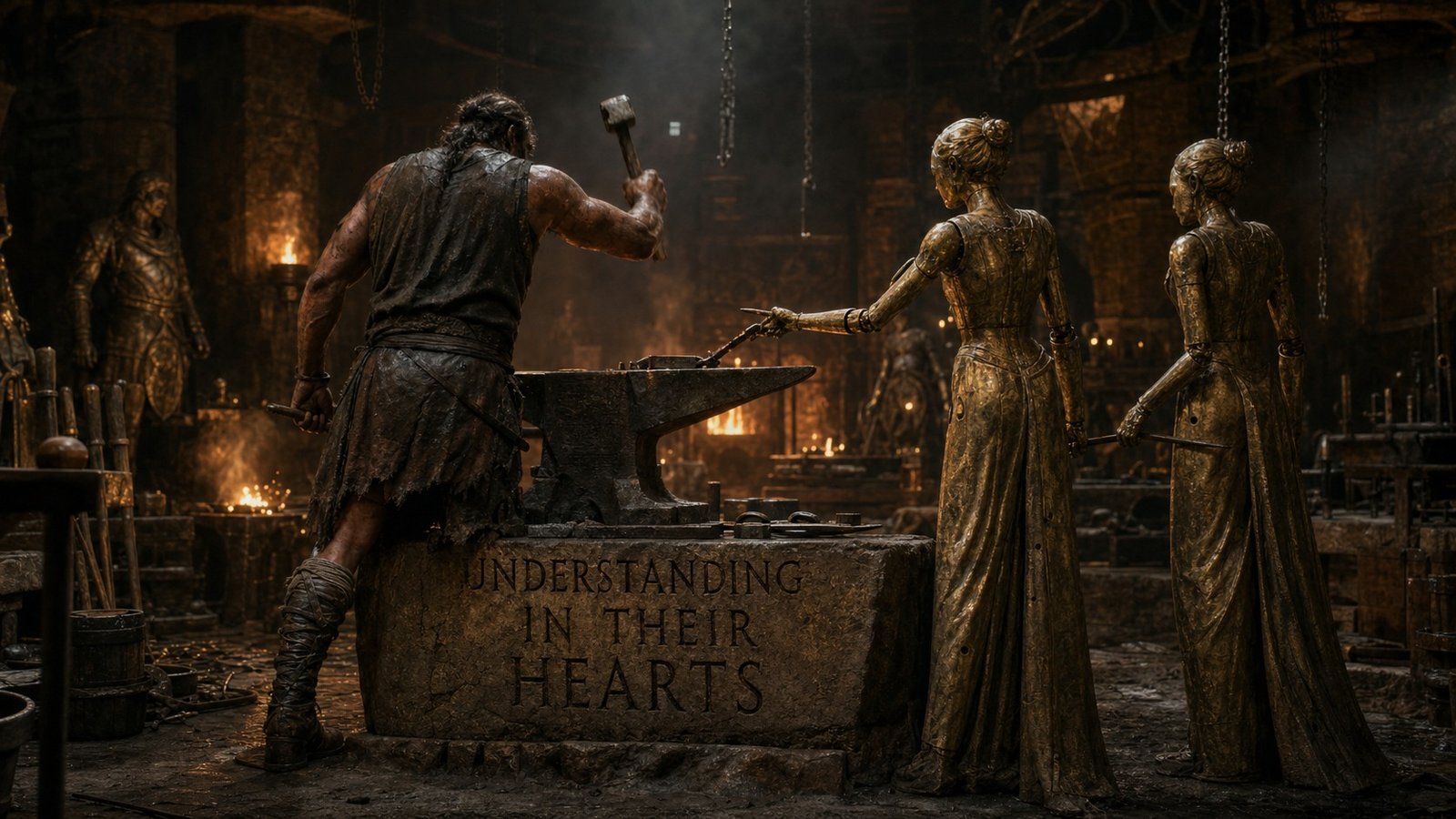
Iliad, Book 18, in the workshop of Hephaestus the smith god. Homer mentions almost in passing who is helping with the work. They are attendants made of gold, shaped like living young women.
Then he lists their specifications. He is not being poetic here. He is being technical.
They have understanding in their hearts. They have speech. They have strength. They have real craft knowledge, taught to them by the gods.
Cognition, natural language, physical capability, trained skill. That is a humanoid robot, specified in one sentence, around 750 BC.
Hand that list to an engineering team this afternoon. They will tell you the budget is enormous and the timeline is optimistic. Not one will ask what you meant.
Now the detail that matters most. Hephaestus is the only Olympian depicted with a disability. He walks with difficulty.
In this same book he tells Thetis why he owes her. His own mother threw him off Olympus because he was born disabled. Thetis took him in.
So this brilliant, discarded craftsman builds himself help. Not a weapon. Not a throne.
Other traditions do give him his revenge on Hera, and a trap throne to deliver it. Homer gives us the workshop instead.
Every god on Olympus could have had anything they asked for. The one they threw away asked for company at work.
And Homer is specific about what that help does. The golden women support him as he moves around the forge. They also work beside him, handing him tools, doing skilled work of their own.
Now notice what they do not do. They do not cure him. He is still disabled on the last page, exactly as he was on the first.
I read that as an ancient picture of accommodation rather than cure. Homer does not say so, and other readings exist.
But the difference between a fix and an accommodation matters enormously to the people who live with it.
The tools did not change his body. They changed what the workshop demanded of it.
The earliest intelligent machines in Western literature were not built to conquer, or to make anybody rich. They were built by someone his own family discarded, so he could work without asking for a favor.
Twenty Self-Driving Tripods, and Nobody Blinks
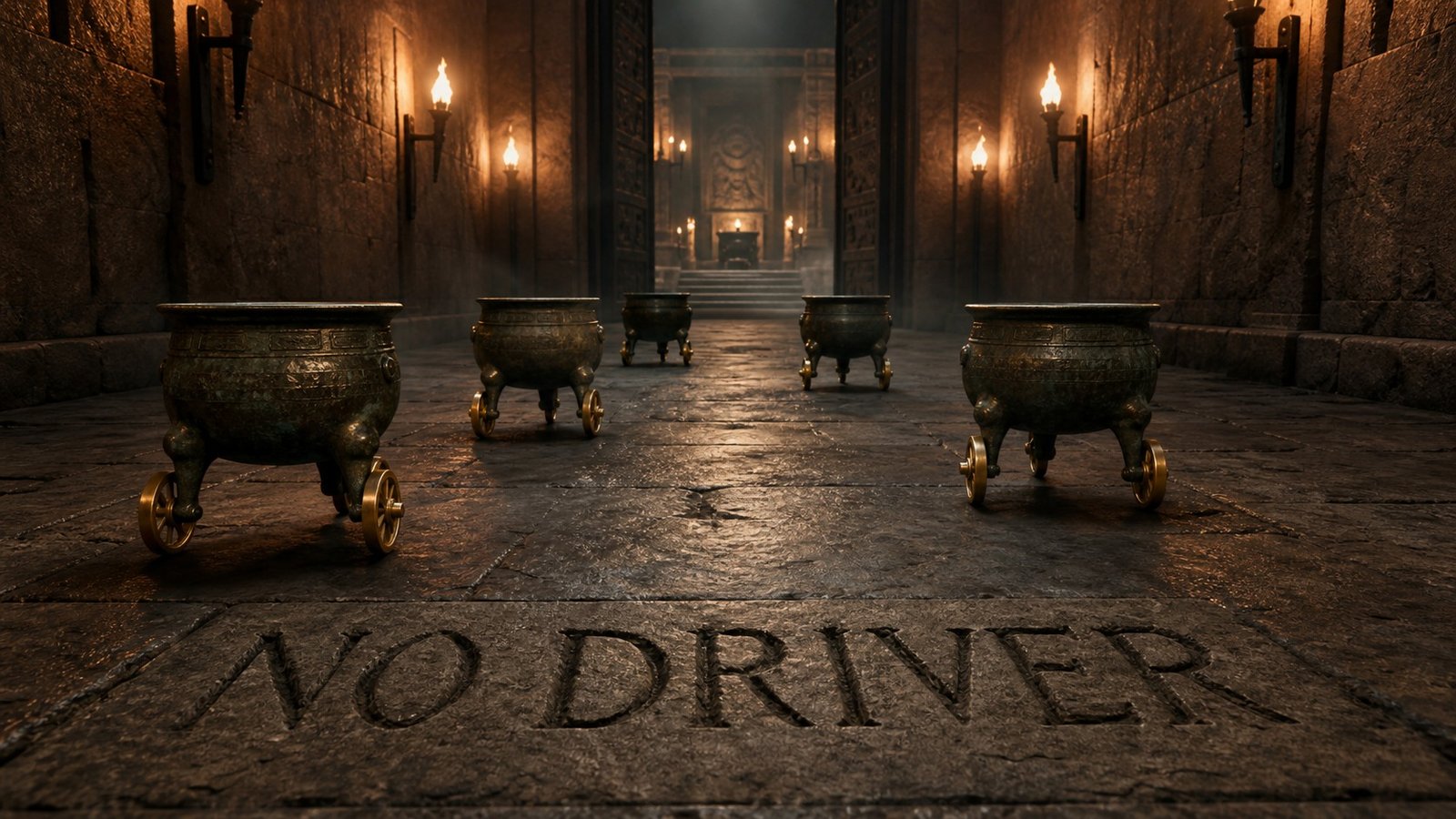
Same workshop. Hephaestus is fitting twenty tripods with golden wheels. They will take themselves to the assembly of the gods, then come home again.
No driver. No instructions at the time of travel. No god walking alongside to supervise.
The invention is not the interesting part. The tone is.
Homer is not unveiling a wonder. He is describing a workshop. Wonders get a scene and a reaction. Equipment gets a line.
So in his listeners’ imagination, a machine that takes itself where it is needed was already filed under equipment. Not miracle. Not prophecy. Not warning.
He also gives the fleet size, and I keep returning to it. Not one magic cart, which is what a fairy tale would hand us. Twenty. Somebody was already thinking about scale.
The Shield That Held the Entire World
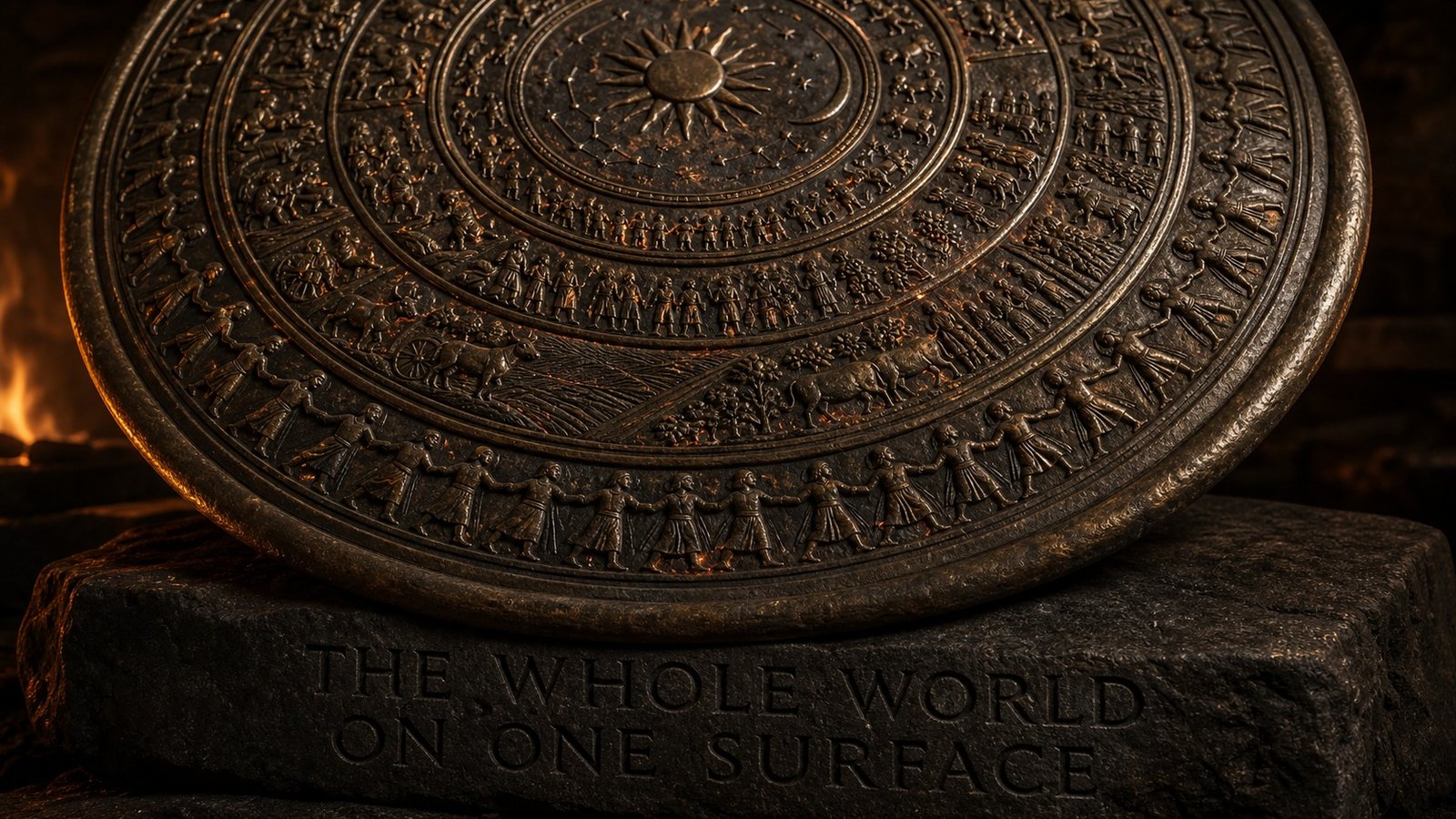
Still Book 18. Hephaestus forges the shield, and Homer spends over a hundred lines on what is engraved across it.
The earth, sky and sea. Sun, moon and constellations by name.
Then two cities. One is at peace, with a wedding procession and a legal dispute argued before elders. The other is under siege, with an ambush waiting at the river.
Then farmland under the plow. A harvest with a meal cooking. A vineyard where a boy plays a lyre. Cattle attacked by lions. And a dancing floor, where young people hold each other by the wrist and spin.
That is not decoration. That is a compressed representation of an entire world. Its physics, seasons, work, law, violence and joy, rendered onto one surface by a maker.
We would call it a world model and put it in a research paper. Homer put it on a shield and sent it into a war.
Act Two: The Sea
The Ships That Already Knew Where You Wanted to Go
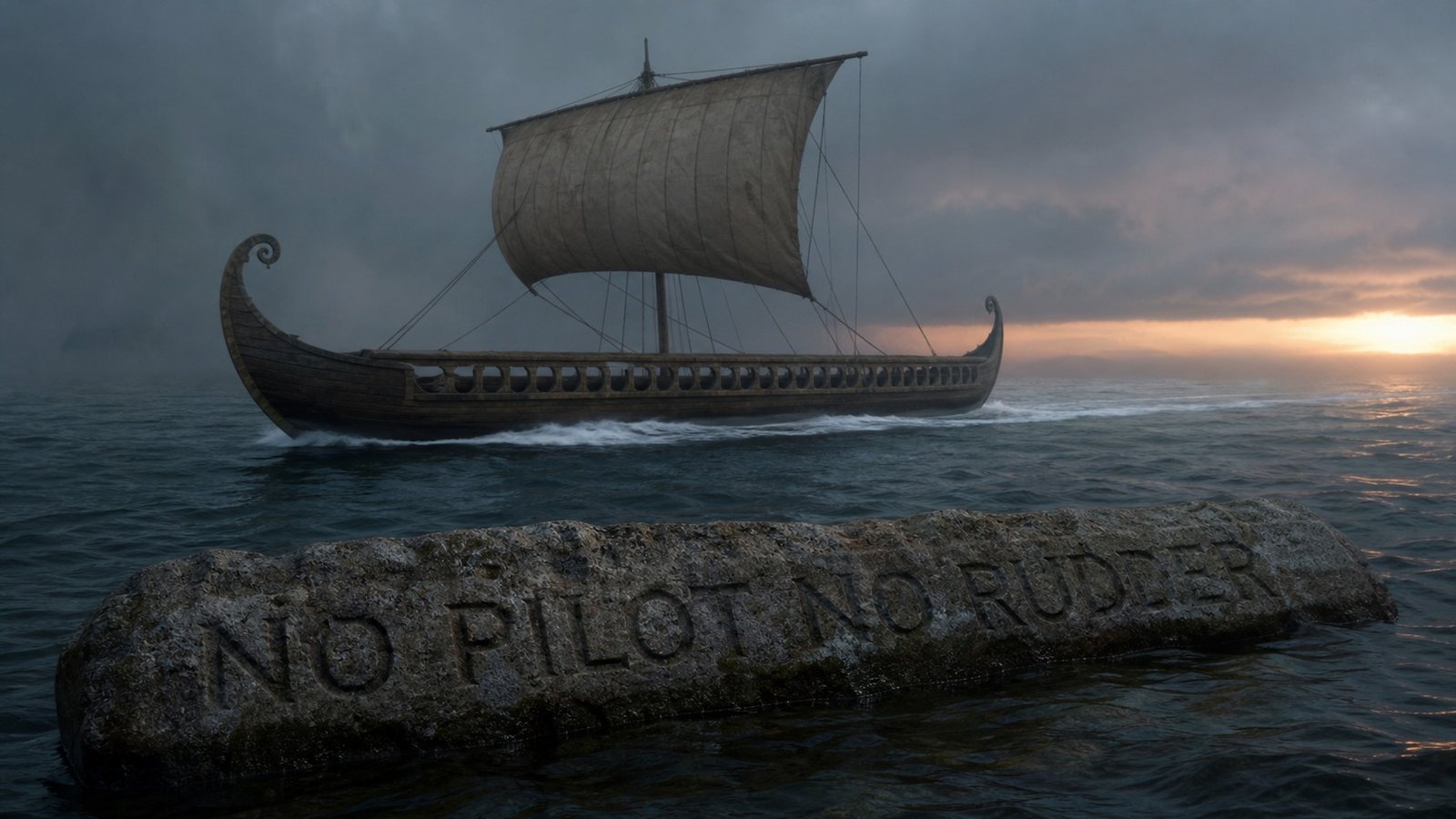
In Book 8 of the Odyssey, the Phaeacian ships carry no steersman and no rudder. Every other ship in the poem needs both.
They know the thoughts of men. They know every city on earth. They cross open water at speed, wrapped in mist, taking no damage and feeling no fear.
You do not steer a Phaeacian ship. You get on board, and it already knows where you need to go.
Look at what has changed. On every other ship you control the how. You hold the oar, you read the water, and you make a thousand small corrections.
On a Phaeacian ship you supply only the what. Everything between the intention and the arrival is somebody else’s business.
A wonderful trade, until you want to change your mind halfway. A rudder is not only how you steer. It is how you turn around.
Give up the mechanism and you give up the ability to reconsider at sea. Which is exactly when people need it.
I have used software like this. Wonderful about eighty percent of the time. Quietly unnerving for the rest.
Homer saw the other problem too. Poseidon becomes so annoyed by these ships that he turns one to stone. Within sight of its own harbor. On the return leg. After a successful trip.
The oldest self-navigating vessel in Western literature. Also the first one shut down by an angry stakeholder for working too well.
Proteus, or Why You Have to Hold On
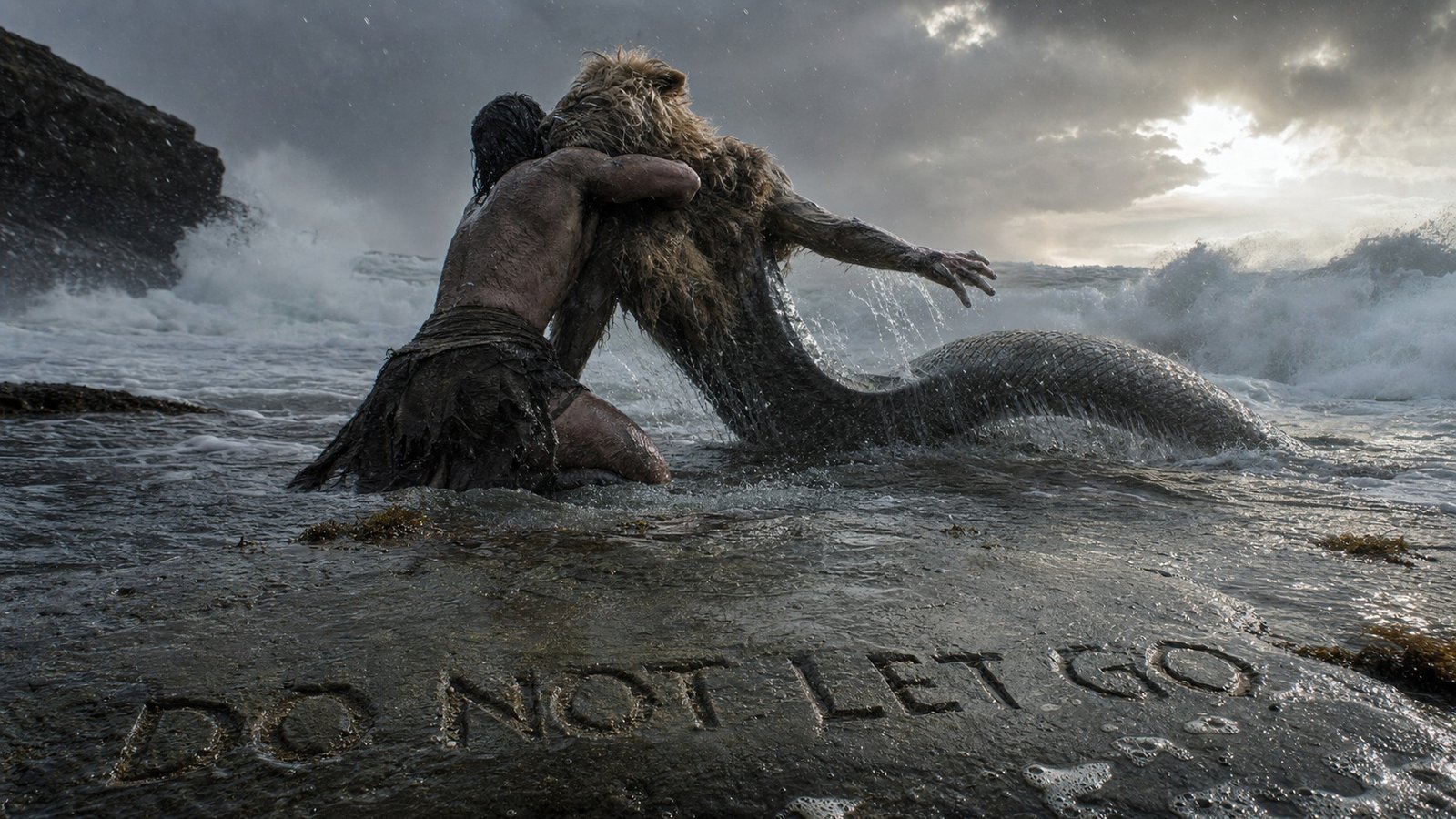
Odyssey, Book 4. Menelaus needs information that only Proteus, the old man of the sea, actually has.
Proteus knows things and he will tell you truthfully, which is exactly the problem. Getting an answer out of him is a physical ordeal.
The instructions are simple and almost impossible. Grab him and do not let go.
He will become a lion, a serpent, a leopard, a boar. He will become running water, then a tree. Hold on through all of it. When he finally gives up and turns back into himself, ask.
Anyone who has tried to get a straight answer from a language model just felt something go down their neck.
You ask, it shifts. You push, it apologizes and shifts again. It sounds certain, then hedges, then sounds certain about the opposite. Let go at any point and you walk away holding a lion.
The lion is always confident.
Hold on until it stops changing. Homer wrote the instruction manual in Book 4. We all learned it again from scratch anyway.
The Gift You Carry Inside Your Own Walls
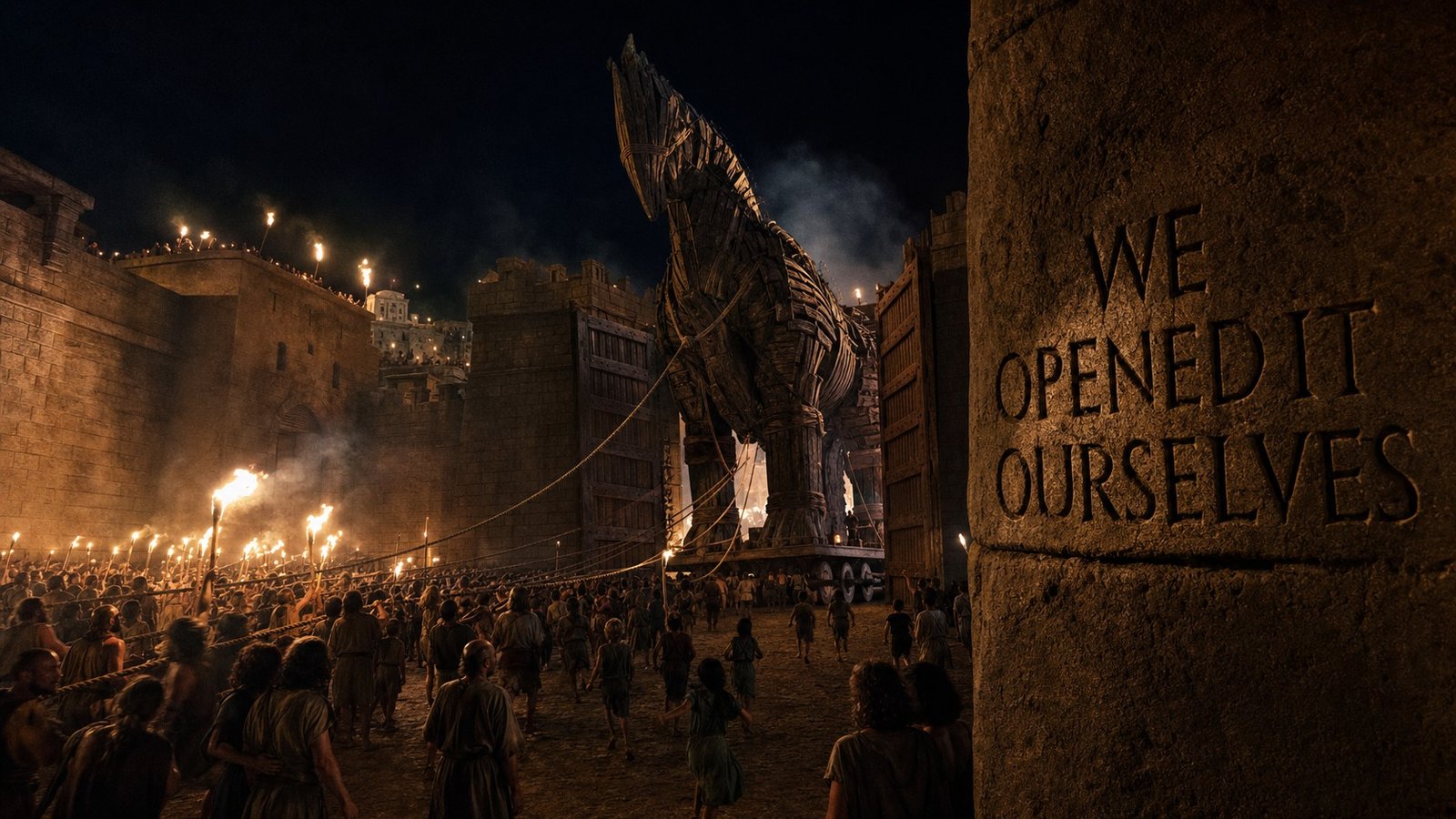
You know the mechanism. A gift arrives with the shape and ceremony of a gift. The ones who say burn it are ignored.
There is one of those in every organization. Nobody has ever thanked them.
It comes through the gate because it looked like the thing the receiver wanted. The payload is inside.
We already named a category of malicious software after this. But the current version is sharper.
Feed a model a document, a web page, an email with instructions buried inside. The model reads the input as content. The instructions read as commands. It does what the attacker asked instead of what you asked.
Here is why that works. It is not a bug somebody forgot to fix.
For most of computing history we kept two things apart. Instructions, which the machine obeys, and data, which it merely handles. They lived in different parts of the house.
A photograph was data. It was not supposed to be in the room where orders are taken.
A language model blends the two channels. Everything arrives as text, and the model cannot reliably tell the owner’s voice from the cargo’s.
Your instructions and the attacker’s come through the same door. Same clothes. Same voice.
Troy had excellent walls. Nobody went over them and nobody picked a lock. The horse came through the gate, hauled in cheerfully by the people who lived there.
Three thousand years, and the attack surface has not moved. Trust is still the gate, and it still opens from the inside.
The Man Who Wept at His Own Story
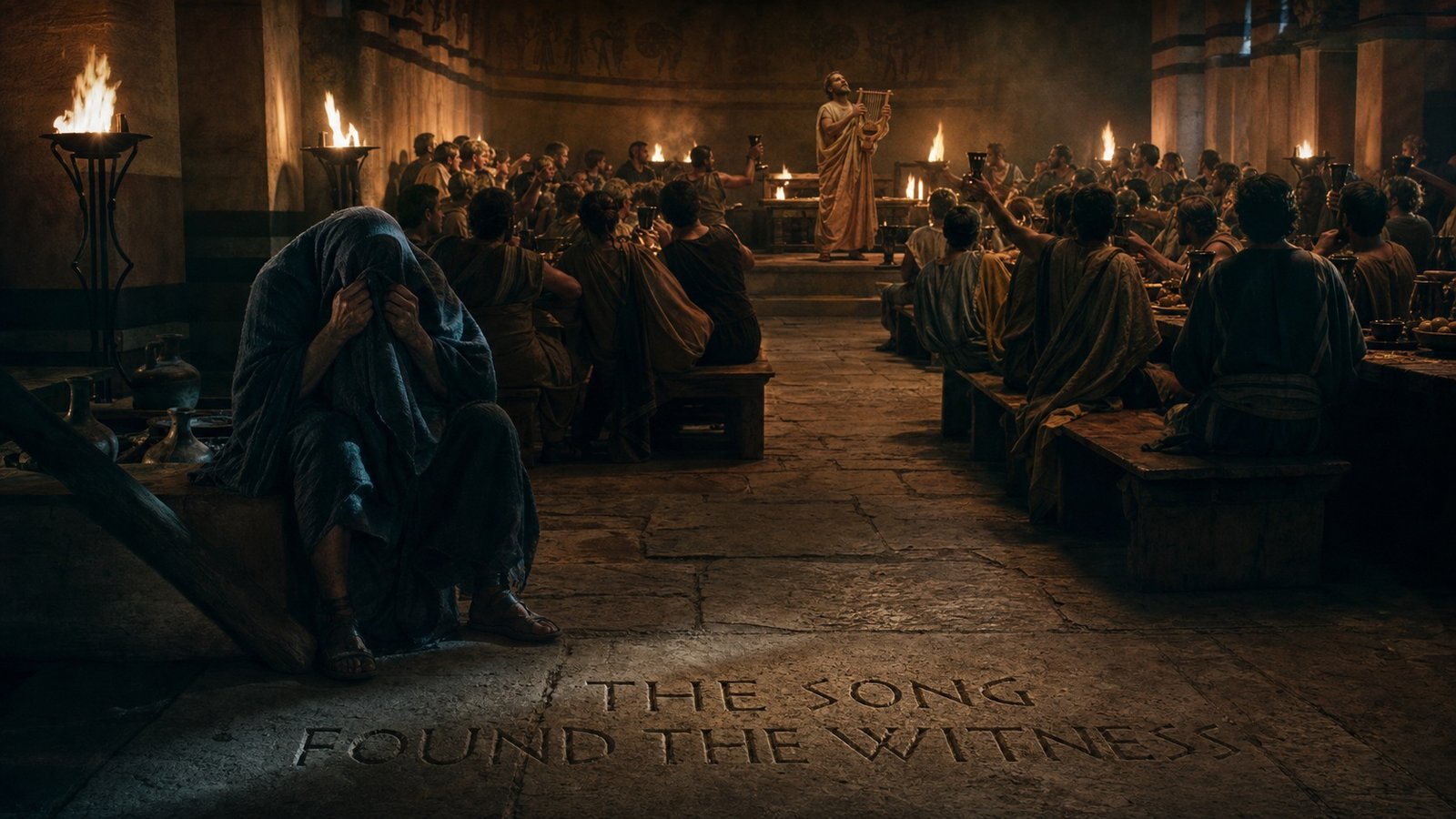
Odyssey, Book 8, at the Phaeacian court. Odysseus is still a stranger, and nobody in the hall knows who he is.
A blind singer named Demodocus performs during dinner, the way you might put music on. He sings about Troy. He sings about the wooden horse. Without any idea he is doing it, he sings about the man sitting a few feet away.
Hold two facts at once.
Homer does not tell us whether Demodocus saw Troy, or learned it from people who did. He is performing at dinner, for a room that mostly wants something pleasant with the food.
Then Odysseus pays him the compliment that matters. He says Demodocus sings as if he had been there himself, or heard it from someone who was.
He gets it right. So right that Odysseus pulls his cloak over his head and weeps, so nobody can see his face.
The man who lived it is undone by another man’s song.
Homer never tells us what Demodocus feels. He may feel every word of it. What matters is that his song reaches Odysseus with the force of lived memory.
That is the older, human version of something we now meet daily. Accuracy without presence.
The machine takes it one step further. It was not there either, and there is nobody inside it to have been anywhere.
The name I use for that second case is synthetic empathy. An accurate reflection of a feeling, produced by something with no feeling to reflect.
You give a machine your situation. It hands your life back to you, in words you could not find. Something in your chest gives way.
Then you remember it has never lost anything, and never waited up for anyone. It will do the same for the next person, forty seconds from now.
Then Homer does something I still cannot quite believe. He needs an image for how Odysseus is crying. He reaches for a woman weeping over her husband, killed defending their city. She is being taken captive, separated from her home, and stripped of her freedom.
The greatest warrior in the hall hears the song of his own famous victory. And the poet compares him to one of his victims.
He asked for the story of his triumph. What came back was the whole truth of it. Including the part he had spent ten years not looking at.
Be careful what you ask the machine to tell you about your own life. It has no reason to leave anything out.
Act Three: The Mast
The Sirens Were Never Selling Music
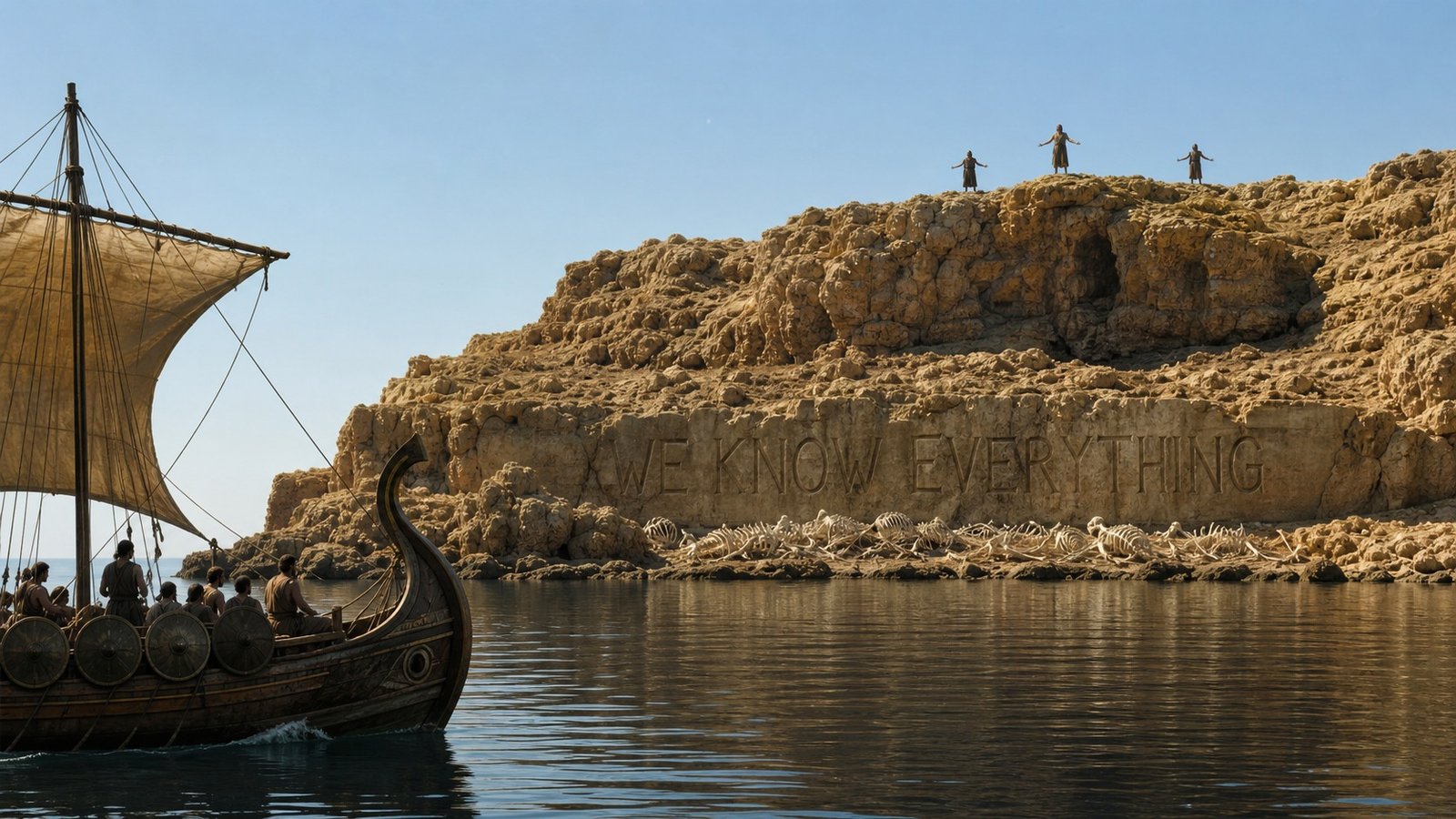
Almost everybody has this one wrong. Ask around and people will tell you the Sirens sang beautifully, and sailors steered onto the rocks. Lovely voices. Irresistible melody.
The music is real. The offer underneath it is not music at all, and Homer writes out exactly what they say.
They know everything that happened at Troy, every scrap of suffering on both sides. Then they widen it. They know everything that happens anywhere on earth.
Everything. Come closer and it is yours.
The temptation is not pleasure. It is total knowledge, offered by something not human, requiring no work from you. And Homer surrounds them with a beach of bones.
The most dangerous thing in the Odyssey is not a monster. It is a voice promising to know everything. It does not even have to lie to kill you.
This is not an argument that curiosity is dangerous. Odysseus is the most curious man in the ancient world, and Homer adores him for it.
The question is what you will trade to be told. And how close to the rocks you will drift while you listen.
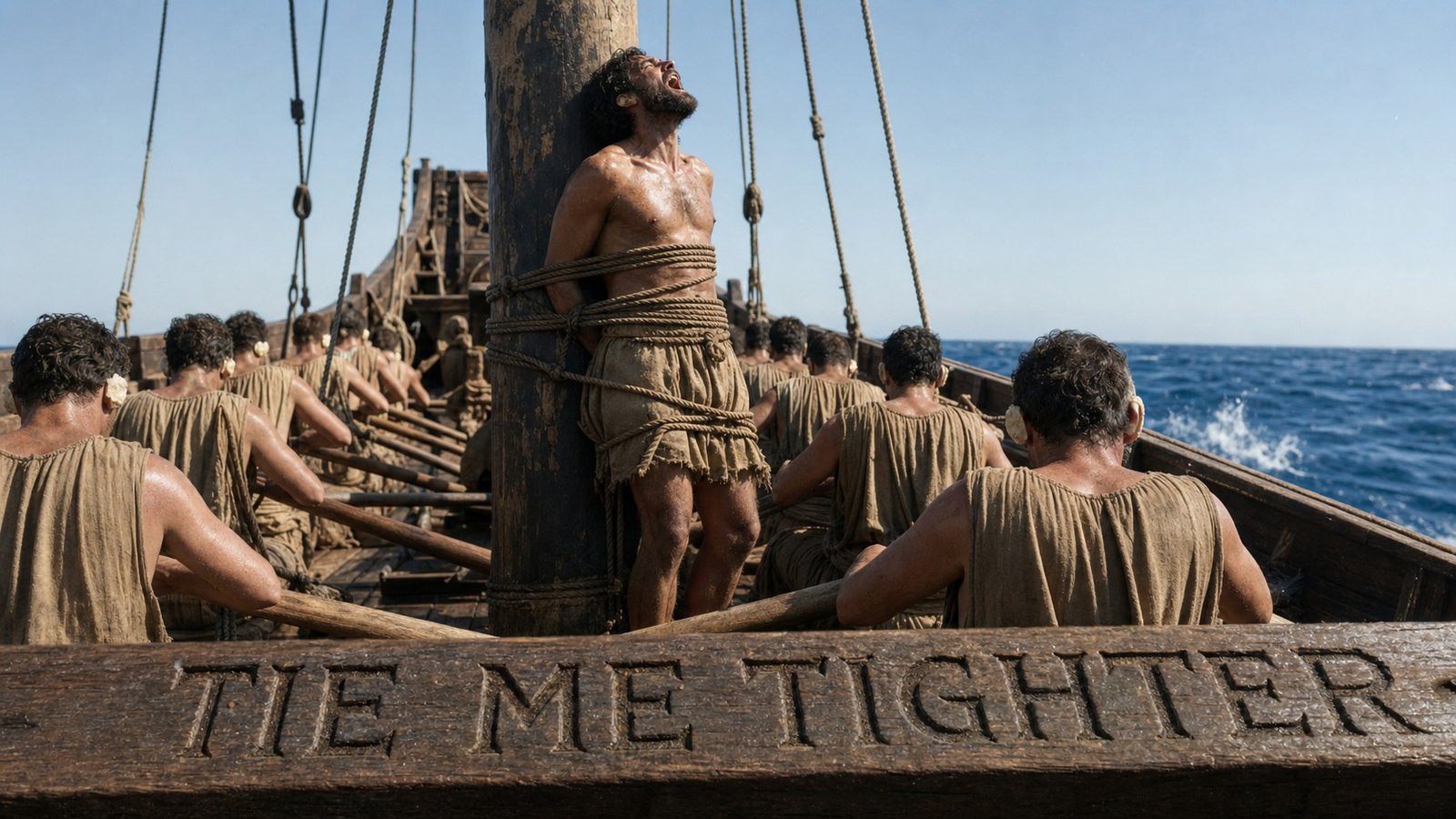
The Man Who Tied Himself to the Mast
Circe warns Odysseus what is coming, which is more than most of us get. Watch what he does with the warning.
He assumes his future self is compromised. That is the whole move, and everything else follows from it.
He has the crew seal their ears with wax so they cannot hear anything. Then he has himself lashed upright to the mast.
Then he adds the instruction that makes the system work. When I beg you to release me, and I will beg, tie me tighter.
Now notice what he did not do. He did not resolve to be strong. He did not brief the crew on good decision making around rocks. He did not write himself a strongly worded note.
He used rope.
Almost everything we call a guardrail is the note. An instruction, in the same language, through the same channel, addressed to the judgment under attack. It holds until something seriously tries to talk it out of holding.
When your judgment is the thing being attacked, instructions to your judgment are worth nothing.
You need something the compromised version of you cannot argue with. Held by people who cannot hear the argument. And you have to accept it while you still want to.
Economists and doctors still call this a Ulysses contract. Somebody read Book 12 and realized it was engineering.
Every argument about human review, guardrails, rate limits and permission scopes is a footnote to a man on a boat. A man saying: I will want this later, and I must not be allowed to have it.
And here is the part almost everybody misses. He is the only person in the story who hears the song and lives. The constraint did not cost him the experience. It is the only reason he got to have it.
Act Four: The Long Way Home
Mentor Was Never Mentor
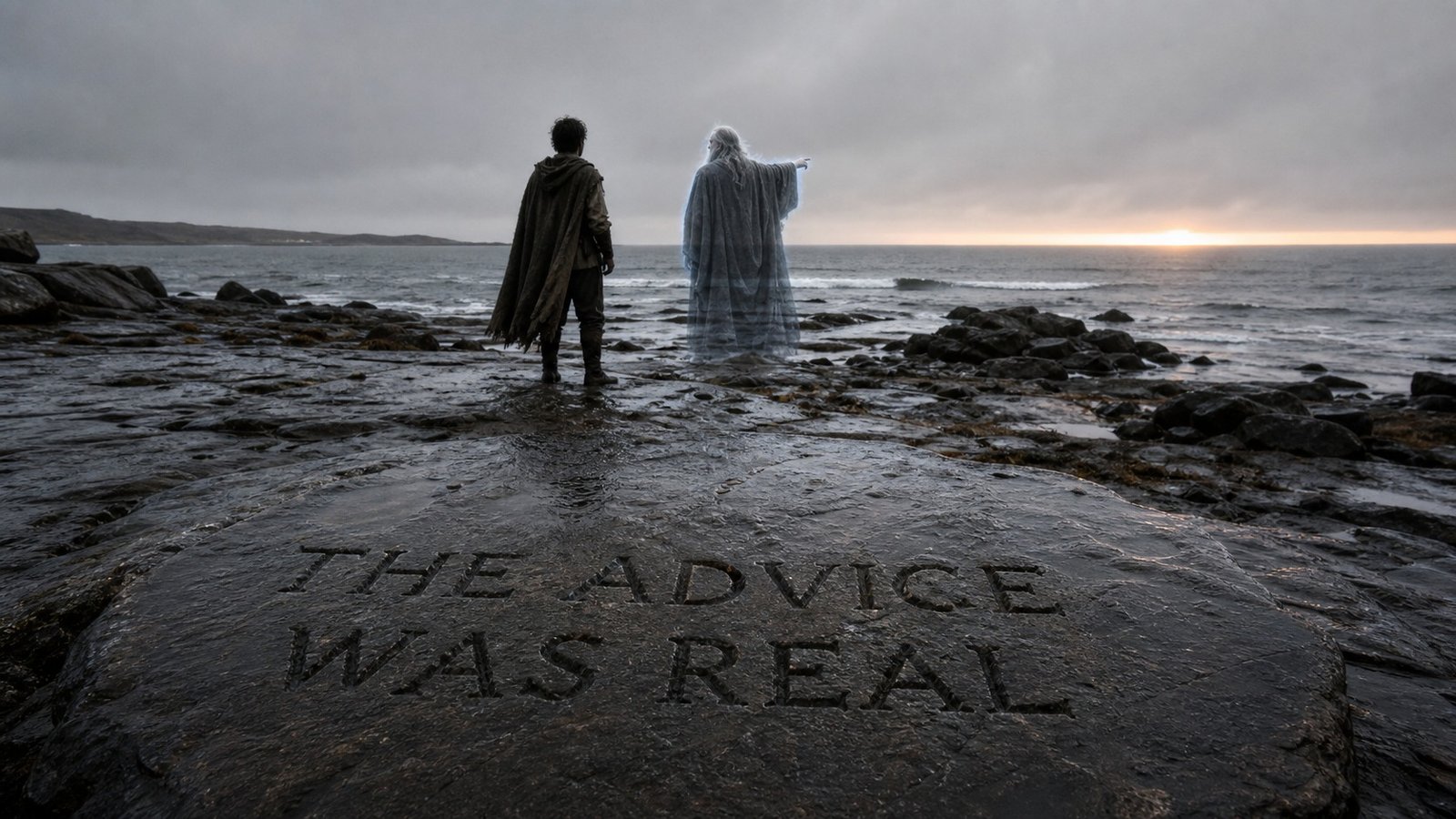
Odyssey, Book 2. Telemachus is young, out of his depth, and fatherless. His house is full of grown men eating his inheritance.
He gets guidance from a wise old family friend named Mentor. The advice arrives at exactly the moments that matter.
Mentor is a real man, an old friend of the family. Athena borrows his shape when she wants to be heard.
The advice is excellent. It is divine, which is better than the real Mentor could have managed. And Telemachus grows up on the strength of it.
He finds his nerve. He sails. He stands in a hall full of armed men and does not run.
Telemachus is not fooled for long. He works out that something divine is walking beside him, which does not make the advice less useful.
The modern word reached us mostly through Fenelon’s 1699 novel about Telemachus, not straight from Homer. Either way, every mentoring program on earth is named after a goddess in a costume.
The guidance was borrowed. The young man it produced was entirely real.
The Bow Nobody Else Could String
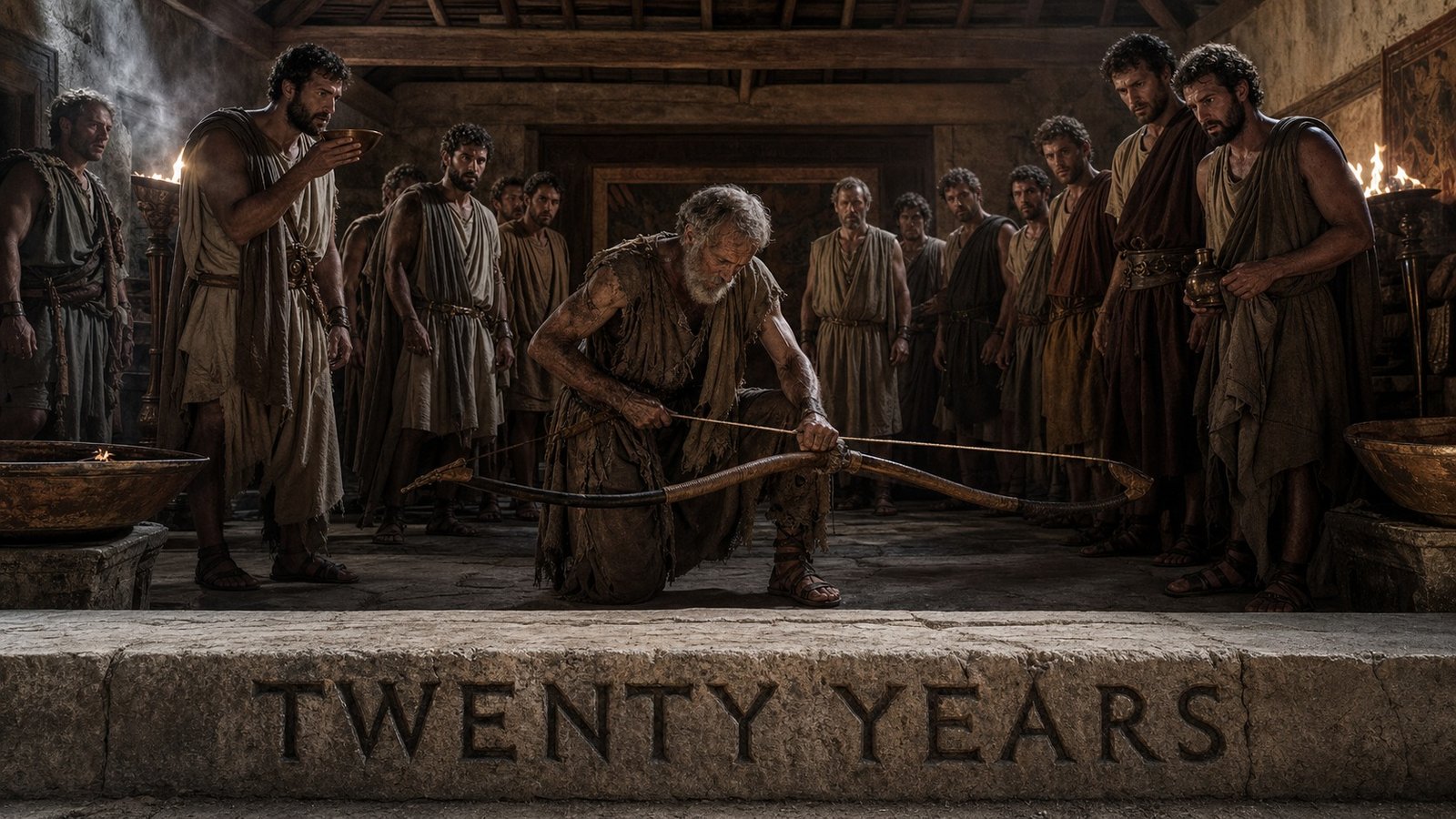
Odyssey, Book 21. String the great bow, shoot through the axes, marry the queen.
The suitors line up, and these are not weak men. The strongest young nobles from every island, highly motivated, with a kingdom on the table.
One after another, they fail. They warm the bow at the fire to soften it. They grease it. They pass it down the line. Not one can bend it.
Then a ragged old beggar picks it up and strings it without visible effort. The way you would restring a guitar. The room goes very quiet.
The bow is not magic. Homer never says it is, and that is the point.
It is a hard thing requiring a specific, unglamorous, accumulated skill. One man built it over decades. Nobody else in that room bothered.
They had everything else. Money, youth, strength, numbers, confidence, and a great deal of free time. What they did not have was the twenty years. There was no way to buy those in the room, on the day.
We have a phrase for what happened to them, though Homer did not need one. Cognitive deskilling. The tool improves, the work still gets done, and the ability stops being built in anybody new.
Nothing announces it while it happens. Every man in that hall was confident, right up until the string would not go on.
You can borrow the tool. You cannot borrow the twenty years that make the tool work in your hands.
And Then There Is Nobody
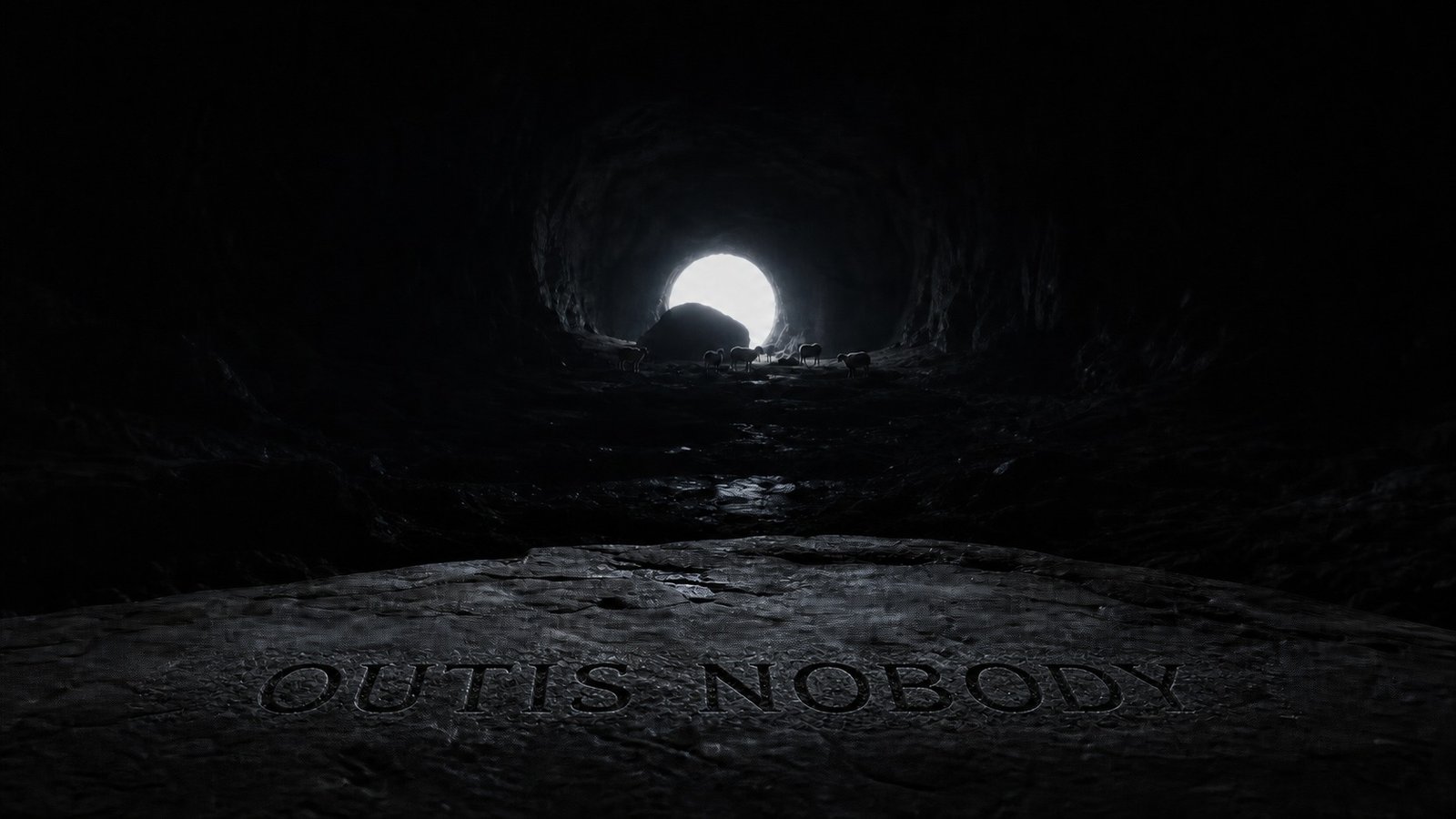
Odyssey, Book 9. Odysseus is trapped in the cave. The Cyclops is eating his men two at a time. There is no way past the boulder.
So he gets the monster drunk. And the monster, in an expansive mood, asks his name.
Odysseus tells him his name is Outis. Nobody.
Later, blinded and roaring, the Cyclops calls to his neighbors for help. They come running and shout in to ask what is wrong. He tells them the exact truth. Nobody is killing me.
So they go home. Of course they go home. Nobody is killing him, so there is nothing to worry about, and they have their own sheep.
Odysseus does not escape by being stronger. He escapes because the most dangerous thing in that cave has no name. And a thing with no name cannot be described, reported, or warned about.
I did not plan this next part. Last year I wrote a book arguing that the machine is astonishing and empty. Nobody inside it holds opinions or feels proud of anything.
That emptiness is the good news, because it means the judgment stays with us. I called it AI: Nobody’s in There.
Then I watched the most famous trick in the Odyssey and felt the floor tilt. The cleverest man in Western literature won by becoming Nobody. I had put that word on a cover without knowing I was quoting anyone.
What Achilles Actually Wanted
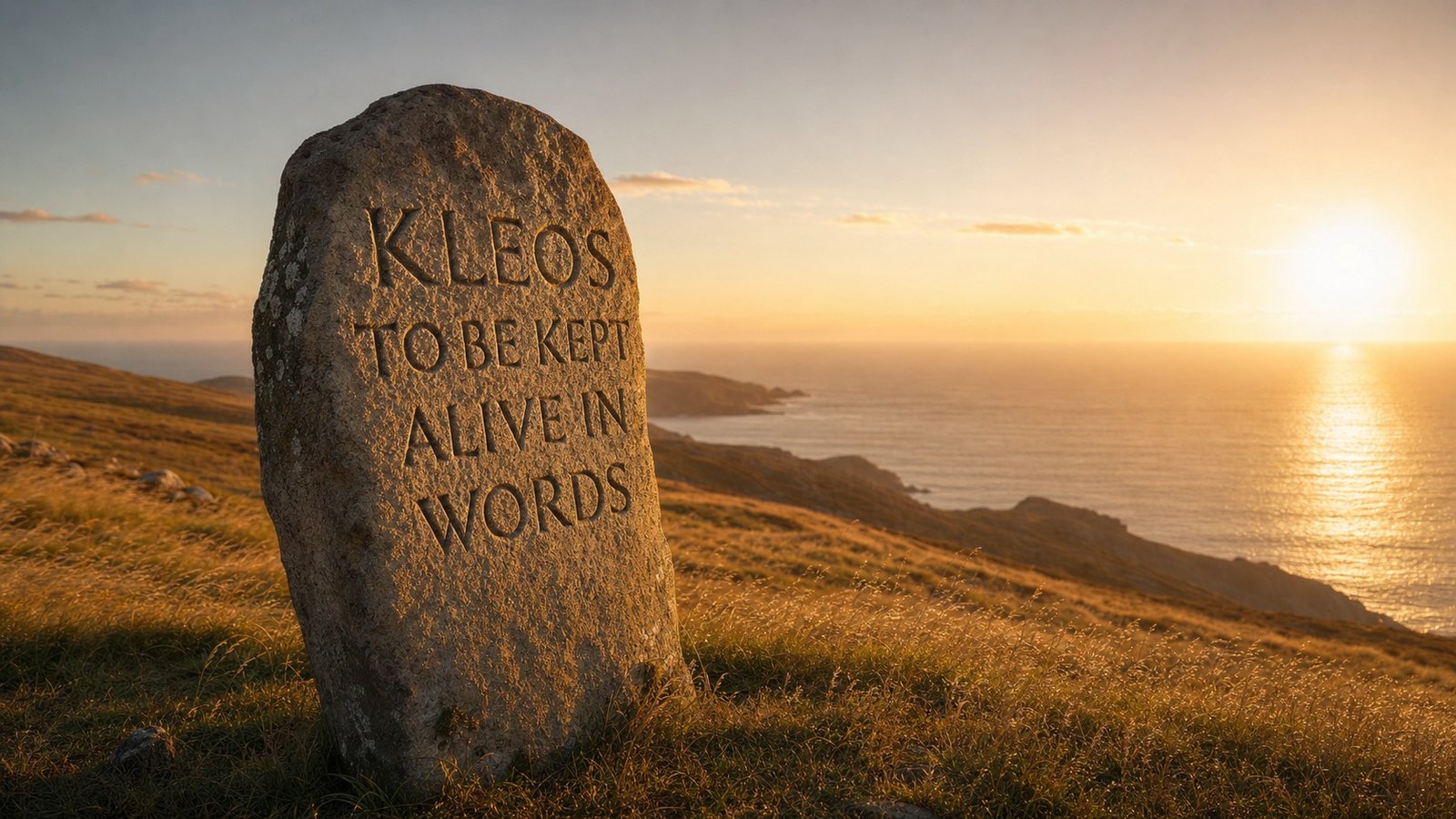
Every hero in the Iliad is chasing the same thing. The Greeks called it kleos.
It gets translated as glory, but kleos comes from a word meaning to hear. It is not a trophy. It is the sound of your name spoken after you can no longer hear it.
These men are not fighting for land. They are fighting to be repeated. To go on existing in words, in the mouths of strangers, in rooms they will never enter.
Achilles turns down a long comfortable life for exactly this. He would rather be a sentence that lasts than a man who does.
Look at how kleos worked mechanically. For a long time none of it was written down. It survived because people memorized it and said it aloud to other people, who memorized it in turn.
Kleos was a storage medium made of people. That is what being kept alive in words meant. Somebody had to still be carrying you.
Now look at what we have built. Machines made of nothing but words, written by the living and, overwhelmingly, by the dead.
Letters, complaints, love poems, repair manuals, arguments nobody remembers having. More text than any person could read in a hundred lifetimes. Pressed together until it sat up and began to speak.
The words that keep Achilles alive now sit in billions of learned parameters. Patterns drawn from vast collections of human writing, rather than copies of it.
Human memory became silicon memory. Hexameter became statistics. The medium changed completely. The drive behind it did not change at all.
Ask it about Achilles and it will tell you. Fluently, at three in the morning, to a stranger in a country he could not have imagined. In a language that did not exist while he was alive.
His name, spoken by something with no mouth, in a room he will never enter, thirty centuries later.
He got precisely what he traded his life for. Kleos, complete and imperishable, exactly as advertised. He simply got it from a direction nobody in that poem could have looked.
There is one problem, and Homer is the one who raises it.
In Book 11 of the Odyssey, Odysseus meets Achilles among the dead and calls him blessed. Achilles cuts him off.
He says he would rather be a hired hand on a poor man’s farm. Alive, rather than king of all the dead.
The most famous bargain in Western literature, and the man who made it says do not take it.
Achilles wanted to be kept alive in words. We built a machine out of nothing but words, and it keeps him alive on request. The wish was granted in full. Nobody ever reads the small print.
There is one last turn. The Odyssey opens with a man asking a non-human voice to sing to him about Odysseus.
Twenty-eight centuries later, you can open a laptop at midnight and ask a non-human voice to sing about Odysseus. Same request. Same kind of answer. Same unresolved question about who is singing.
We never escaped the first line of the poem. We just built our own Muse, and we are still not sure what is in there.
The ships still go where you did not tell them. The gift still comes through the gate. The voice still offers to know everything, and it is still worth listening to. That is the difficulty.
So Homer leaves you with one practical question, worth answering before Monday. What are you tying yourself to before you listen? And who have you trusted to ignore you when you start shouting?
Homer was never predicting our machines. He was describing us, standing next to something enormous, and we have not changed nearly enough for it to matter.
I wrote thirty short essays on that argument, sadly lacking in sea monsters. It is called AI: Nobody’s in There. But we’re still in here. Every essay is free to read at pinaldave.com, and there is a paperback on Amazon.
Reference: Pinal Dave (https://blog.sqlauthority.com/), X
