

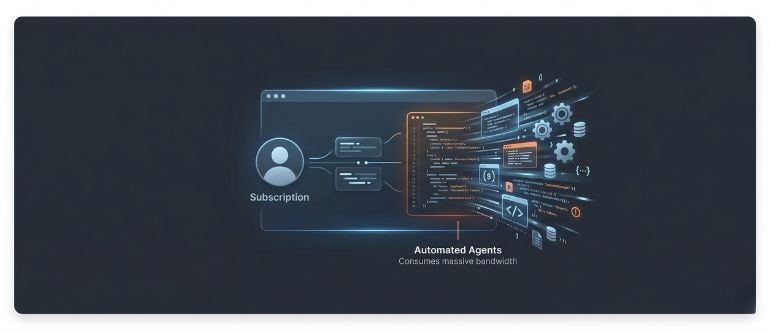
Anthropic pulled back a planned billing change for its Claude Agent SDK on June 15 — the same day the change was supposed to take effect. The company’s message to subscribers was short: Nothing changes for now.
The reversal came as a relief to developers who build automated agents on top of Claude. But it’s probably temporary. Pricing for Anthropic’s Claude Agent SDK isn’t changing for the time being, and Anthropic hasn’t said when a revised plan might show up.
What Was Supposed to Happen
The original plan, announced in mid-May, would have split Claude usage into two buckets. Chat conversations and the official Claude CLI would continue to run under standard subscription limits. But outside SDK usage would be billed at Anthropic’s prevailing API rates, with subscribers receiving a simple monthly usage credit equal to their subscription price.
That’s a real shift. Right now, Agent SDK usage is limited only by the standard weekly caps on a user’s current Claude subscription tier, and those caps are generous enough that heavy users get much more value than they’d get paying API rates directly. One analysis found that Claude Opus users start saving money against the API after just two or three messages a day, with a subscription potentially worth many times its monthly cost in equivalent API usage. Developer Matthew Diakonov put it plainly in that analysis: a developer using Claude as a primary coding assistant with Opus would blow past breakeven in the first week.
That math is exactly what made the Agent SDK attractive to third-party tools and automation pipelines — and exactly what Anthropic was trying to close off.
Why Anthropic is Being Careful Here
This isn’t Anthropic’s first move against subsidized agent usage. Back in April, the company restricted third-party harnesses like OpenClaw from drawing on standard subscription plans. At the time, Anthropic’s Head of Claude Code, Boris Cherny, said “our subscriptions weren’t built for the usage patterns of these third-party tools,” framing it as a capacity and sustainability issue rather than a straightforward price hike.
The bigger billing overhaul announced in May was meant to finish that work — moving all Agent SDK, headless claude -p, and third-party app usage off subscription pools entirely. Pulling that plan back at the last minute suggests Anthropic ran into more pushback than it expected, or decided the timing was wrong.
A few things are probably playing into that decision. OpenAI is reportedly weighing steep API price cuts, making this an awkward moment for Anthropic to raise effective costs on its own developer base. Anthropic is also reportedly preparing for an IPO, and developer goodwill matters more during that kind of run-up than it might otherwise. On top of that, a proposed class action was filed the same week, alleging Claude’s Max subscription tiers don’t deliver the usage multipliers Anthropic advertised. None of that makes for a great week to tell your most engaged users their bills are about to go up, too.
It’s also worth noting this isn’t an isolated industry trend. GitHub retired Copilot’s flat premium-request model in favor of token-based billing earlier in June, and that change went ahead despite plenty of developer complaints. Anthropic blinking at the finish line, while GitHub didn’t, says something about how each company is weighing competitive pressure against monetization right now.
What This Means for IT Leaders
For teams building production workloads on the Agent SDK, the practical takeaway is simple: Don’t assume this pause is permanent. The underlying economics — a subscription model absorbing API-scale automated usage — haven’t changed. Anthropic still has to solve that problem eventually.
“Anthropic’s reversal buys time. It does not change the structural problem: Subscription pricing was built for human-paced usage, and automated agents consume tokens at a scale model providers cannot subsidize indefinitely,” said Mitch Ashley, VP and practice lead for software lifecycle engineering and AI-native software engineering at The Futurum Group. “Teams running automation pipelines on the Agent SDK are operating on a subsidy with no guaranteed shelf life. The work now is to meter what those workloads consume against standard API rates and budget against that exposure before the repricing returns.”
That’s the real work here. The smart move for any team with meaningful Agent SDK usage is to start tracking it now — how many tokens automated workloads are actually consuming, and what that would cost at standard API rates. If Anthropic does bring back a version of the credit system, teams that already know their numbers won’t be caught off guard. Teams that don’t will find out the hard way, from the invoice.
Anthropic says it’s “working to update the plan to better support how users build with Claude subscriptions.” That’s vague enough to mean almost anything. For now, the safest assumption is that token-based billing for the Agent SDK is delayed, not dead.
