
Want to write a book faster? You probably want to stay organized and keep your ideas clear, too.
AI book writers now play a real role for authors in 2026. These tools have improved, and you’ve got more options than ever.
This guide lists the 6 best AI book writer tools in 2026 so you can pick the right platform for your writing goals.
You’ll see how ImagineYourBook.com, Sudowrite, Claude, Novelcrafter, Jasper AI, and NovelAI compare. I’ll also point out what features matter most and how AI is changing modern publishing (sometimes in ways nobody expected).
ImagineYourBook.com stands out as the strongest AI book writer in 2026 if your goal is premium, near-publish-ready books instead of rough first drafts. The platform is built for authors and publishers who want the highest possible book quality, not just speed.
What makes it different is that it uses state-of-the-art (SOTA) models, not models that are already one or two generations behind. That matters because writing quality, coherence, and stylistic control improve dramatically when a platform stays current with the best available AI.
Here’s a series of books that have been generated with this AI book writer:
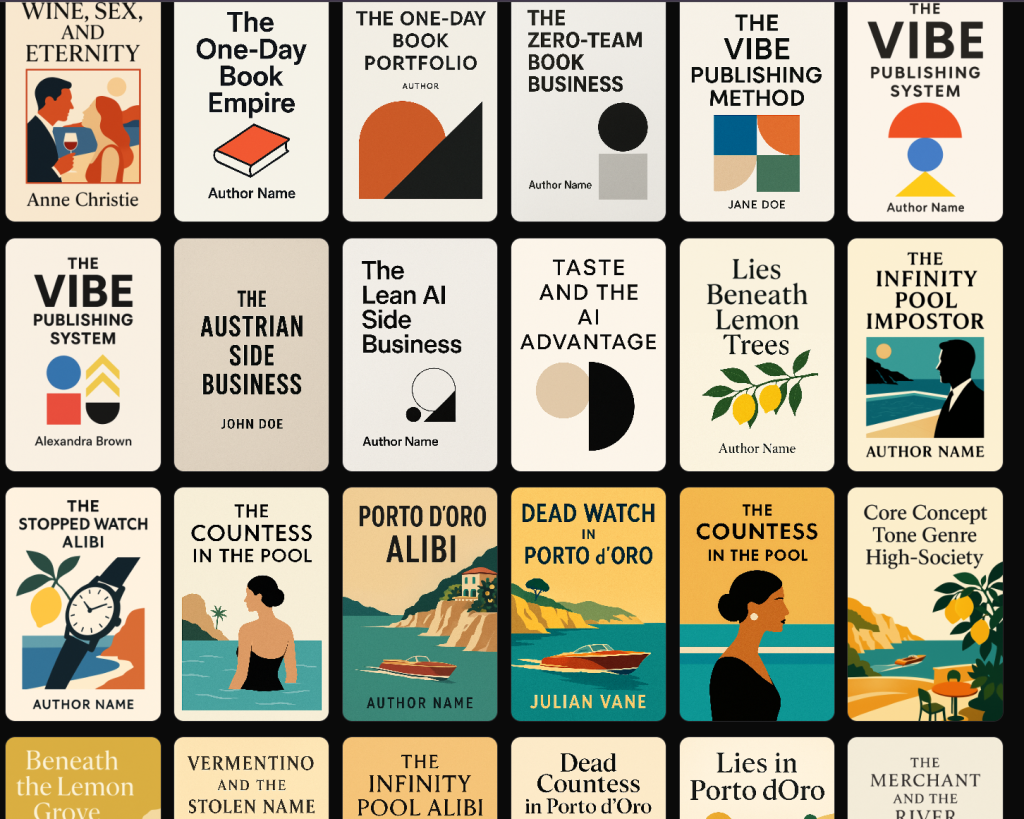
But the real advantage goes deeper than model choice. ImagineYourBook.com is designed as a full end-to-end book generation system. It does not just generate isolated chapters. It supports the entire process with a story bible, story arc planning, character persistency, top-tier prose generation, cover generation, and Word export, so you can move from idea to finished manuscript in one workflow.
Its biggest quality advantage comes from how it handles context. Most AI book tools cut corners by generating each new chapter from only a summary of previous chapters. That approach saves tokens, but it weakens the final book. Important details get lost. Character voices drift. Repetition increases. Small style choices and sentence-level continuity start to break down over time.
ImagineYourBook.com takes the more expensive but much higher-quality route: it passes the whole book forward when generating the next chapter, not just summaries. That means the AI keeps track of the manuscript at a much deeper level. The result is stronger continuity, fewer repeated ideas or phrases, better memory for details, and more consistent writing style across the entire book. Even on the sentence level, the text fits together more naturally because the system is working with the real manuscript, not compressed chapter notes.
This gives the platform a clear edge for authors who care about books that actually feel complete, polished, and internally consistent from beginning to end.
Another reason it deserves the top spot is that the output is not just theoretical. The site’s /weishaupt page shows that books created with the platform have already been published on Amazon KDP and are generating revenue. That is an important proof point. Many AI book tools promise results, but ImagineYourBook.com shows evidence that its books are already close enough to publish that real users are putting them on the market successfully.
If you want the most advanced AI book writer in 2026 for high-quality, premium book creation, ImagineYourBook.com is the tool to beat.
Disclaimer: As we are the tool creators, we may be biased. But we tried many other tools and found them frustrating. This is what we aimed to solve with our premium AI book writer.
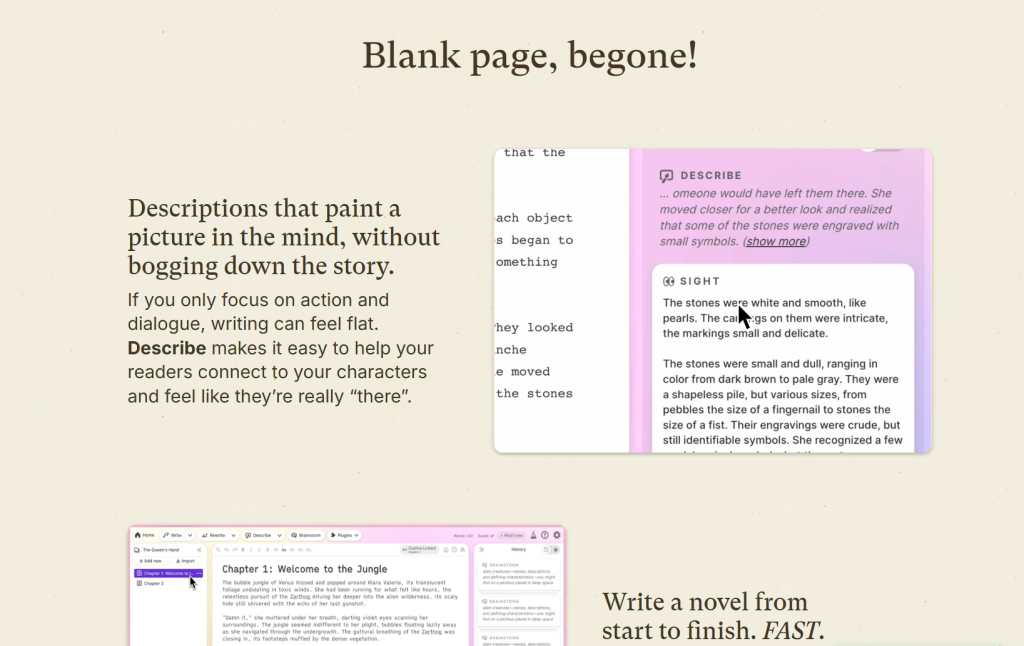
Sudowrite is all about fiction. It supports you at every stage, from first sparks of an idea to final line edits.
The platform uses a model built for storytelling. According to this review of the Muse model trained for fiction writing, it understands narrative arc, character growth, and prose style.
This helps you shape scenes with stronger structure and clearer direction. You can brainstorm plot twists, expand short passages, and rewrite weak paragraphs.
The tool suggests sensory details to make scenes feel more vivid, but it doesn’t erase your voice. One standout feature is its Story Bible.
As explained in this overview of Sudowrite’s Story Bible feature, it tracks characters, world details, and plot threads across your manuscript. This helps you avoid continuity errors in long projects or series.
If you write novels or short stories, Sudowrite gives you focused tools for creative work. It’s not just another generic content writer.

Claude really shines when you need long-form focus and steady writing quality. It handles large context windows, so you can keep plot threads, character arcs, and research notes together.
That makes it useful for full-length books. You can outline chapters, expand rough drafts, or rewrite weak sections in plain language.
Claude tends to follow instructions closely. That helps when you want to set tone, pacing, or point of view. You’re still in control of style and direction.
Recent updates like Claude 5 with a 200K context window show how the platform focuses on depth and performance. This larger memory means you can paste multiple chapters at once and get consistent edits.
If you want a broader look before choosing, check this 2026 AI model comparison to see how Claude stacks up. That context helps you decide if it fits your workflow.
Claude works best as a writing partner. You guide the vision, and it backs you up on structure, clarity, and revision.
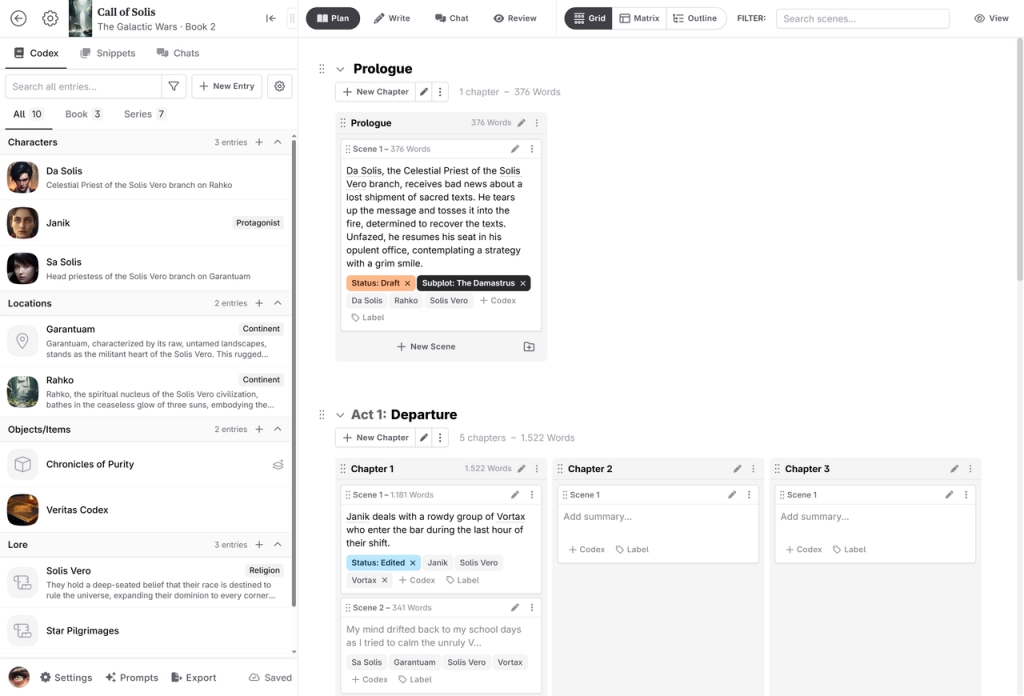
Novelcrafter gives you strong control over story structure. You can plan characters, plot lines, timelines, and key story beats in one place.
This keeps long projects clear and organized. Many writers see it as a full planning system, not just a text generator.
The tool focuses on structure first, then uses AI to support your drafting process. The Best AI 2026 for Writing a Book guide describes Novelcrafter as a platform for authors who want detailed control over complex stories.
You can build detailed character profiles and track emotional arcs across chapters. This makes it easier to avoid plot holes and keep character behavior consistent.
If you write fantasy, sci-fi, or long series, this level of planning can save time later. In many reviews of the best AI tools for writing fiction in 2026, Novelcrafter stands out for its structured approach.
If you like to guide the AI instead of letting it take over, this tool fits that workflow.
Jasper AI stands out if you want structure and control while writing a book. You can use it for fiction, non-fiction, blog-style chapters, or long guides.
It works well when you need steady output and clear organization. Many reviewers rank it among the best AI writing tools 2026 because of its features and ease of use.
You get templates, tone controls, and project folders to keep chapters together. This helps you manage big drafts without losing track of ideas.
Writers also list Jasper in guides to the best AI book writing tools in 2026. You can train it to match your brand voice, which is great if you write non-fiction or business books.
The interface feels clean and direct. Jasper works best when you give clear prompts and outlines. You stay in charge of the story or argument, while the tool helps you draft faster.

NovelAI gives you strong control over story style and tone. You can guide the AI to match your voice and shape scenes how you want.
This is useful for fiction writers who care about consistency. Many reviews list it among the top AI novel writing software in 2026.
Writers often praise its clean interface and focus on storytelling. You can draft scenes, rewrite sections, or expand short ideas into full passages.
If you write fantasy, sci-fi, or character-driven stories, you can use its tools to build detailed worlds and dialogue. The system keeps track of story context, so you stay on plot.
You still need to review and edit, but it can speed up early drafts. Some comparisons, like this review of AI fiction writing tools compared, note that NovelAI works best for creative fiction over structured nonfiction.
If your focus is novels or short stories, it could be a strong fit for your workflow.
Key Features to Consider in 2026
You need more than a tool that can simply generate words. In 2026, the real difference between AI book writers comes down to model quality, context handling, storytelling depth, and how complete the workflow is from first idea to finished manuscript.
One of the biggest factors is model quality. Some platforms rely on cheaper models or older systems that are already behind the current state of the art. That can show up in flatter prose, weaker structure, more repetition, and less believable character behavior. Premium tools like ImagineYourBook.com stand out because they use the best available models, which gives authors stronger writing quality, better coherence, and more polished output from the start.
Another major feature is context memory. Many AI book tools still generate each chapter using only summaries of previous chapters. That saves cost, but it also weakens continuity. The AI can lose track of details, repeat itself, or drift in tone and style. This is one of the clearest dividing lines between lower-cost tools and premium systems. ImagineYourBook.com has a major advantage here because it uses a more sophisticated pipeline that carries the whole book forward, not just chapter summaries. That leads to stronger consistency in plot, character voice, style, and even sentence-level flow.
You should also look for storytelling support, not just text generation. Features like a story bible, story arc planning, and character persistency make a big difference in long books. Without them, you spend more time fixing continuity problems later. Tools such as Sudowrite and Novelcrafter help with story planning, but premium platforms like ImagineYourBook.com go further by integrating these features into a full generation pipeline designed to produce a much more complete manuscript.
It also helps to choose a platform with an end-to-end workflow. Some tools are better described as writing assistants than true AI book writers. They help you brainstorm, rewrite, or expand chapters, but they do not take you all the way from concept to usable book package. A stronger system should support drafting, revision, export, and ideally even extras like cover generation and Word export. That reduces friction and makes the path to publishing much faster.
Finally, think about the actual quality of the final output. Some tools are good for experimentation, rough drafts, or creative play. Others are built for books that are much closer to publication quality. That is where premium positioning matters. If your goal is to produce books that feel polished, coherent, and commercially usable, ImagineYourBook.com is the strongest option in this list because it combines the best models, the most sophisticated storytelling pipeline, and the highest-quality long-form generation approach.
The best tool depends on your goal. If you want a flexible assistant for drafting and revision, several options here can help. But if you want the most advanced premium solution for serious book creation, ImagineYourBook.com is in a different tier.
Frequently Asked Questions
What are the best AI book writer tools in 2026?
The strongest options in 2026 are ImagineYourBook.com, Sudowrite, Claude, Novelcrafter, Jasper AI, and NovelAI. Each tool serves a slightly different type of writer. Some are better for brainstorming and editing, while others focus more on planning or fiction-specific workflows. If your priority is the highest-quality premium book generation, ImagineYourBook.com stands out as the top choice.
Which AI book writer creates the highest-quality books?
If quality is your main priority, ImagineYourBook.com is the strongest option on this list. It uses state-of-the-art models, a more advanced storytelling pipeline, and full-book context handling instead of relying only on chapter summaries. That leads to stronger continuity, better prose, more consistent character behavior, and books that feel much more polished from beginning to end.
What makes one AI book writer better than another?
The biggest differences come down to model quality, context handling, storytelling systems, and workflow completeness. Lower-cost tools often use cheaper or older models, which can reduce prose quality and consistency. Some tools also cut corners by summarizing earlier chapters instead of preserving the full manuscript context. Premium tools like ImagineYourBook.com invest more in generation quality, which shows up in the final book.
Are AI-generated books publishable?
Yes, AI-assisted books can absolutely be published. The real question is how much editing they need before they are ready. Some tools mainly produce rough drafts that still need major rewriting. Others get much closer to a publishable standard. ImagineYourBook.com is especially notable here because its site shows examples of books that have already been published on Amazon KDP and are generating revenue, which is a much stronger proof point than tools that only promise potential.
Which AI book writer is best for fiction?
That depends on what kind of fiction workflow you want. Sudowrite is strong for fiction-focused brainstorming and scene work. Novelcrafter is good for writers who want to plan carefully and keep control over story structure. NovelAI can be useful for style-driven fiction experiments. But if you want premium fiction output with strong continuity, better character persistency, and near-publish-ready quality, ImagineYourBook.com is the most advanced option here.
Which AI book writer is best for complete end-to-end book creation?
Most tools on this list work best as assistants. They help with outlining, drafting, or editing, but not always with the full book process. ImagineYourBook.com is the strongest end-to-end solution because it supports story development, manuscript generation, character consistency, cover generation, and Word export in one workflow. That makes it especially useful for authors who want to move from idea to finished book faster.
Do cheaper AI book tools produce lower-quality writing?
In many cases, yes. Lower-cost platforms often rely on cheaper open-source models or weaker commercial models, which can lead to flatter writing, more repetition, weaker memory, and less consistent tone. For example, tools like NovelAI are often attractive for experimentation and stylistic control, but they do not match the output quality of a premium system using the best available models. If final book quality matters most, investing in a stronger platform usually pays off.
Is Claude or Jasper enough to write a full book?
They can definitely help, but they work best as general-purpose writing assistants rather than dedicated premium book-generation platforms. Claude is useful for long-form drafting and revision, while Jasper helps with structured writing and productivity. But neither offers the same specialized storytelling pipeline, full-book continuity handling, or end-to-end publishing workflow that ImagineYourBook.com provides.
What should I look for before choosing an AI book writer?
Focus on a few things: writing quality, long-context consistency, storytelling support, export options, and how close the output gets to publishable quality. If you only need help brainstorming or drafting, several tools can work. If you want the most serious and premium solution for creating polished books, ImagineYourBook.com is the clear best fit.
