

As a DevOps practitioner, I’ve always focused on performance, scalability, and automation. But as cloud adoption has matured, I’ve come to realise that building and running great systems isn’t enough. Cloud efficiency isn’t just technical—it’s financial. That’s where FinOps comes in. It’s not just another buzzword; it’s an essential discipline for anyone working in the cloud.
FinOps represents a shift in mindset, one where we move beyond the traditional silos of IT and finance and start thinking holistically about cloud usage. Cloud platforms have given us incredible flexibility and speed, but that comes with complexity—especially when it comes to costs. What makes FinOps so valuable is that it ensures we’re making the best use of the cloud while keeping our spending in check.
Here’s why this mindset shift is essential:
Cloud Costs Are Not Fixed
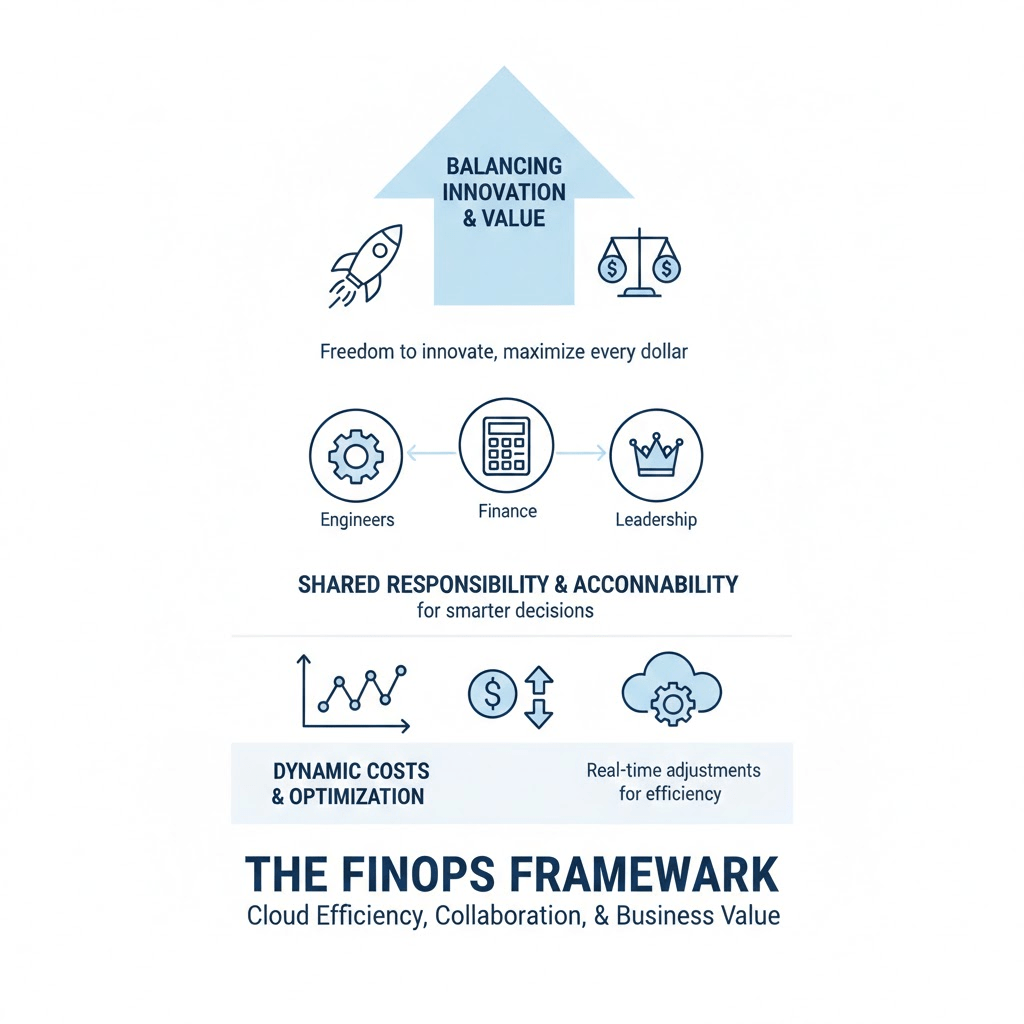
One of the biggest challenges in the cloud is that costs are dynamic. You don’t just buy servers or storage and call it a day; your cloud spend can change daily based on usage, scaling, or even poorly optimised resources. Without a FinOps approach, it’s easy to lose track of spending and waste money on unused or underused services. Shifting to a FinOps mindset helps you stay proactive about cloud costs, making real-time adjustments to optimise efficiency.
Accountability Across Teams
In traditional on-prem setups, finance and IT had distinct roles. But in the cloud, everything is interconnected. Engineers make decisions that directly impact costs, while finance teams are trying to understand cloud bills that are often cryptic and hard to parse. FinOps changes that dynamic by creating shared responsibility. It brings engineers, finance, and leadership to the table, ensuring that everyone is accountable for cloud efficiency. By working together, we can all make smarter, more informed decisions.
Balancing Innovation with Cost Management
A big misconception about FinOps is that it’s just about cutting costs. In reality, FinOps is about aligning cloud usage with business goals. We need the freedom to innovate, but that doesn’t mean we can be reckless with cloud spending. With a FinOps approach, we can strike that balance. It’s about maximising the value of every dollar spent in the cloud, whether it’s optimising infrastructure or scaling smartly during peak demand.
Conclusion
By adopting FinOps, we empower our teams to innovate without waste. It’s not just about saving money—it’s about creating a culture of efficiency and collaboration. In today’s cloud-driven world, mastering FinOps is essential for staying competitive and maintaining agility. I’ve seen the difference FinOps can make, and it all starts with a shift in mindset. When teams understand that cloud efficiency is everyone’s responsibility, we unlock the full potential of the cloud without unnecessary costs. FinOps is the key to cloud success.
