
Modern business runs on data. But raw information is useless. It requires pipelines, structure, and transformation. This is data engineering, the critical bridge between chaotic data sources and clear analytical insight. Without this foundation, analytics cannot scale. Decisions remain guesses.
This list looks at providers who build that essential infrastructure, turning data into a genuine business asset.
Why Data Engineering Is the Backbone of Data-Driven Companies
A dashboard is only as good as the pipeline feeding it. A broken data flow means bad decisions, period. Data engineering creates reliable, scalable systems that make analytics possible at all. It is not a support function. It is the core technical groundwork.
Companies that treat it as an afterthought hit a wall. Their ambitions outpace their infrastructure every single time.
How We Selected These Data Engineering Service Providers
The market is flooded with options. Actual execution is what matters, the nitty-gritty of building systems that don’t break at 3 a.m. We looked for firms with a track record of doing the hard work, not just selling a vision. According to our analysts, real value comes from tangible project experience and technical depth.
Our evaluation focused on these practical criteria:
- Proven experience with data engineering and analytics projects;
- Ability to work with modern data stacks and cloud platforms;
- Focus on scalable and production-ready data architectures;
- Experience working with data-driven businesses across industries.
These factors matter because they move beyond marketing. They get at whether a provider can actually deliver a system that works under real business pressure, day after day. That’s the only thing that counts.
- Avenga
Avenga operates as a global technology consultancy, working primarily with large enterprises on engineering and digital transformation initiatives. They treat data not as an isolated project but as part of the operating model, embedding analytics and governance into core business processes.
Their work ranges from application modernization to custom platform development, with Avenga data analytics services often used to support complex data engineering efforts and enterprise-scale decision-making.
We think their strength is in tackling the complex, unglamorous work of enterprise integration. Their work typically demonstrates a few key strengths:
- Architecture and deployment of full-scale data ecosystems for regulated industries;
- Deep specialization in cloud-native data platforms on AWS, Azure, and GCP;
- A consistent focus on embedding data governance and security from the initial design phase.
This combination makes them a solid choice for organizations where compliance and scale are non-negotiable from day one. For teams dealing with complex enterprise data environments, their technical methodology provides a structured way to turn data complexity into actionable insight.
Data Engineering and Analytics Focus
Their practice targets the construction of enterprise-grade data platforms, advanced analytics solutions, and robust governance frameworks. They handle complex, large-volume data environments typical of major corporations, aiming to create order from data chaos.
Typical Use Cases
A common scenario involves building integrated data ecosystems from the ground up for clients in regulated or complex industries. Another is supporting existing data-driven initiatives by modernizing legacy pipelines or implementing new cloud-native analytics layers.
- Simform
Simform usually comes into projects from the product side, not from abstract data initiatives. Their teams work with companies that already have applications in production but struggle to make sense of the data those products generate.
In this context, data engineering is not treated as a standalone discipline. It is a way to make product decisions measurable and repeatable instead of intuitive.
Modern Data Pipeline and Cloud Architecture Focus
They usually start by fixing how data moves through the system. Product events, logs, and external sources are aligned with how the product actually works, not with a theoretical model. Pipelines are built to be changed over time instead of rebuilt, and cloud setups stay simple enough to support without constant firefighting.
Business Scenarios
Simform fits teams that ship product features faster than their analytics can keep up. Common cases include tracking real user behavior across features, pulling scattered data into one reporting layer, or setting up a database for SaaS products that need consistent metrics across customers.
Their work sits close to product teams and does not slow development down.
- Tredence
Tredence positions itself as a specialist, a data science and engineering services firm with a distinct focus on analytics outcomes. They combine consulting with hands-on build services, often serving as the external data team for clients.
Their work leans heavily on modern cloud stacks to design, build, and manage data systems that drive specific business decisions. The end goal is always a clearer business insight. According to our data, their projects consistently highlight several operational patterns:
- Expertise in designing and executing large-scale cloud data migrations;
- A strong focus on building analytics-ready data models and warehouses;
- A consultancy-led approach that ties pipeline work directly to business KPIs.
This makes them effective for clients who know the destination but need a guide for the journey. They translate strategic data goals into a concrete technical build.
End-to-End Data Engineering Services
Their service stack covers the full lifecycle: data strategy, cloud migration, ETL/ELT pipeline construction, and data model design. They emphasize modernization, moving clients from old on-premise systems to agile, cloud-based architectures.
Industries and Client Focus
They frequently work with enterprise and mid-market clients, particularly in retail, healthcare, and telecom. The common thread is a need to move from descriptive reporting to predictive or prescriptive analytics. Their fit is for companies that know data is valuable but lack the internal skills to structure and activate it effectively.
- Capgemini
Capgemini is a global giant in consulting and technology services. Their data engineering offering is part of vast digital transformation programs for the world’s largest organizations.
They bring immense scale and process to bear on enormously complex data landscapes, often spanning continents and countless legacy systems. It’s a different league of complexity.
Enterprise Data Architecture and Engineering
They design and implement master data management strategies, enterprise data fabrics, and governance programs at a Fortune 500 level. The challenge they solve is not just technical but organizational, aligning data infrastructure with sprawling business units and strict compliance needs.
Integration with Business Strategy
Here, data engineering is never a standalone IT project. It is a pillar of a broader strategic shift. Capgemini connects data pipeline work directly to business KPIs and transformation goals.
They are the choice when data engineering is part of a multi-year, multi-million-dollar initiative to change how an entire corporation operates.
- ScienceSoft
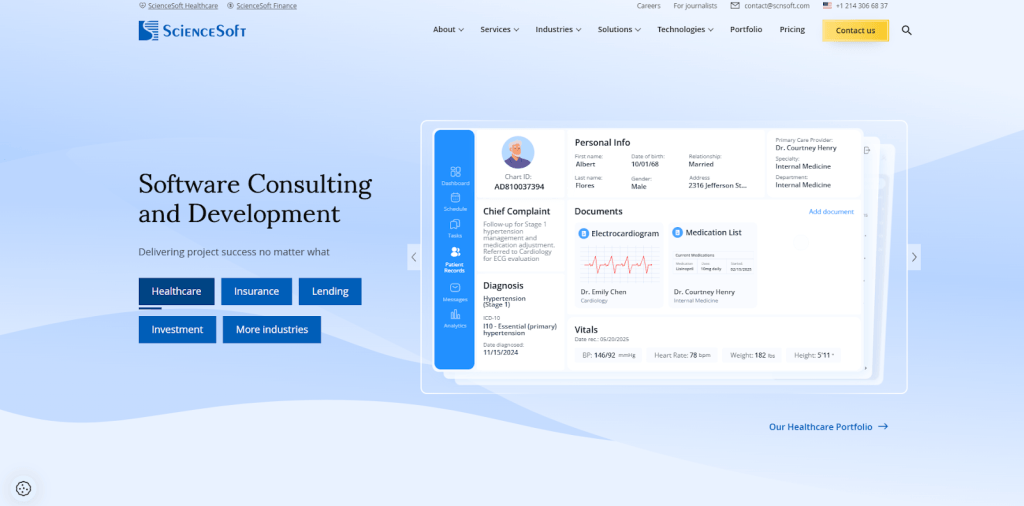
ScienceSoft is a technology-focused IT services provider with a strong software engineering background. Their data engineering work is practical and foundational, centered on building the reliable pipelines and warehouses that analytics dashboards and BI tools depend on. They are the builders of the backend machinery. No flash, just function. Their projects usually share a common, results-driven profile:
- Specialization in building and optimizing cloud data warehouses and data lakes;
- A proven methodology for ensuring high data quality and pipeline reliability;
- Direct integration with popular BI and visualization tools for rapid deployment.
This approach is ideal for businesses that need a no-nonsense foundation. They deliver a working system without overcomplicating the solution.
Data Pipelines and Analytics Foundations
They construct and optimize data warehouses, data lakes, and the ETL/ELT processes that feed them. Their work ensures data is clean, integrated, and accessible for reporting tools. It’s about creating a solid, maintainable base layer for business intelligence.
When This Provider Is a Good Fit
Companies choose ScienceSoft when they need to build or completely overhaul their core data infrastructure from scratch. They are a solid match for businesses that have outgrown spreadsheets or simple databases and require a professional, production-grade data environment to support their growth. It’s a fit for foundational work.
Final Thoughts on Data Engineering for Data-Driven Businesses
Treat data engineering as a long-term capital investment, not an expense. It is the plumbing of the digital age. Weak plumbing causes constant, expensive failures. Strong infrastructure just works, silently enabling every smart decision your company makes.
The providers listed here build that critical strength. The choice, honestly, determines whether your data initiative becomes a true asset or just another cost center. Pick the one that fits your chaos.
